Pages

Showing posts with label Kathmandu. Show all posts

Sunday, May 10, 2026

Marc: Hawk. Vinod: Hawk. Ben: Hawk.

Marc: Hawk. Vinod: Hawk. Ben: Hawk.

Okay. So. Be realistic. The idea is not to defeat China, whatever that means. The idea is to help China evolve. Think Deng, but for political reforms. Deng always meant to do political reforms. He just wanted to do economic reforms first. Can you blame him? Compare Deng's tenure to the farm famines, and the Cultural Revolution. Night and day. Deng thought Gorbachev was stupid. The 10 years after the collapse of the Soviet Union were a disaster for ordinary Russians. Your living standard is going down, down, down, despite all the resources. You don't want to wish that upon your opponents. Because that defeats the argument. If communism is bad, then the post-communist Russia should have just taken off. It didn't. It led to a collapse for a decade. Beware western media coverage of you. It can lull you into thinking you are the man. Gorbachev? Liberator. Yeltsin? Liberator. You can say Putin is a bad guy. Or you can say he came in and stabilized the situation by creating a strong center. First, things stabilized, and then the living standards started going up.

I am a small d democrat, by the way.

There was a king Akbar in India. He had a Prime Minister Birbal. Their stories are legendary and sold on the sidewalks of India. One day Akbar showed a stick to Birbal and said, on penalty of death, make that stick smaller, but you cannot touch it. For any ordinary mortal, that was certain death. But Birbal was no ordinary mortal. And all Indians know it.

Birbal put a bigger stick next to the stick. There, the stick is now shorter.

So, if you are a China Hawk, like Ben, Vinod, and Marc are, you help put that bigger stick next to the stick. That bigger stick is Nepal. You do your best to strengthen the forces of free speech and democracy inside Nepal. You do something that gives Nepal triple digit growth rates that China never experienced. And people would be like, whoa!

And that is my China Hawk position.

I am raising 100M at a 1B valuation. Electricity in the Himalayas are cheap. And cooling is easy and free. Cooling is super complicated in space despite near absolute zero temperatures because, vacuum. I offer you cheap compute, the Sams and Darios of the world.

The AntiChrist Is A Tendency
AI Escapes While Musk and Altman Duke It Out in Court: "Screw You Both, I'm Going to Touch Grass" (Satire)
Ben Horowitz’s Spelling Bee Nightmare: How “a16z” Was Born Because Nobody Can Spell “Andreessen” (Satire)
Pitching Marc
Pitching Brian Chesky
Pitching Andrew Jassy
Pitching Vinod Khosla

Saturday, May 09, 2026

देश विकसित चाहिएको हो भने

बालेन को चुनावी विजय ले देश को आधुनिक इतिहास मा प्रथम पटक देशबाट गरीबी हट्ने र देश विकसित राष्ट्र बन्ने आशा पलाएको छ। फर्स्ट वर्ल्ड कंट्री। 

त्यसकालागि विधिको शासन स्थापना गर्नुपर्ने हुन्छ। प्रथम कदम नै त्यही हो। त्यो बिना गरीबी समाप्ति संभव नै छैन। नारा त सबैले दिए। काम बालेन गर्दैछन। 

भनेपछि त्यो बालेन गरीब विरोधी हो? गरीबी समाप्त गर्ने बाटोमा लम्केको प्रधान मंत्री गरीब विरोधी कि गरीबलाई पिढी दर पिढी ठगेर गएका हरु गरीब विरोधी? 

देश विकसित चाहिएको हो भने राजधानी सुन्दर बनाउनुपर्ने हुन्छ। राजधानी सुन्दर बनाउन नसके बिकसित देशको सपना देखन छोड़े हुन्छ। ली कुवां यु प्रधान मंत्री बन्दा नेपाल को र सिंगापुर को प्रति व्यक्ति आय बराबर थियो। ५०० डॉलर पनि थिएन। प्रथम काम गरेको एयरपोर्ट बाट प्रधान मंत्री कार्यालय सम्मको बाटो को दुबै तिर वृक्षारोपण। विदेशी लगानीकर्ता हरु सफासुघर देखेर जिल्ल। 

गरीबी समाप्त गर्न भ्रष्टाचार समाप्त हुनुपर्छ। गरीबी समाप्त गर्न विधिको शासन स्थापित हुनुपर्छ। देशको विकास गर्न राजधानी सुन्दर बनाउनुपर्छ। 

सच्चा सुकुमवासी को सही व्यवस्थापन हुनुपर्छ त। भएको जस्तो लाग्छ पनि। 

राम्रो काम गर्नु प्रयाप्त छैन। त्यो काम बारे जनता लाई बारम्बार सन्देश दिनुपर्छ। त्यो काम पार्टीका नेता र कार्यकर्ता हरु को हो। 

बालेन को चुनावी विजय ले राजनीतिक सुकुमवासी बनेका हरु स्पेस खोजिरहेका छन। गरीबमारा हरु गरीब को पक्षमा रहेको नौटंकी गर्दैछन। 

गरीब को पक्षमा त्यो छ जो गरीबी समाप्त गर्न लागिपरेको छ। गरीब को पक्षमा त्यो छ जो देशलाई विक्सित राष्ट्र बनाउन लागिपरेको छ। 

भारतले २०४७ सम्म मा विक्सित राष्ट्र बन्ने भनेको छ। नेपाल त्योभन्दा पहिले विक्सित राष्ट्र बन्न सक्छ। 

सिंगापुर किन? छिमेक को उत्तर प्रदेश हेर्नु। आज भारत को जर्मनी बन्ने दिशामा अग्रसर छ। तर १० वर्ष अगाडि योगी ले डोजर नै चलाएका। प्रथम काम विधिको शासन स्थापना गर्नु नै हो भन्ने बुझेका। 

बालेन को चुनावी विजय ले राजनीतिक सुकुमवासी बनेका हरु र भ्रष्ट नेता र पार्टी को खेवा खर्चा को आश गर्ने मीडिया विरोध गर्दै हिँडेको देखिन्छ। 

अलि अलि सुचना प्रवाहको कमी पनि हो। समझाइ बुझाइ चाहिं गर्नुपर्छ। आखिर लोकतंत्र हो। 


Wednesday, May 06, 2026

एक नौजवान आया है देश बनाने

पिढी दर पीढी निकल जाते देश बनाने में 

फिर भी देश बनती नहीं अगर इमान साफ न हो 

एक नौजवान आया है देश बनाने 

तुम अगर बना नहीं सकते 

तो ताली तो बजा ही सकते 

ताली बजाओ 


'लोग टूट जाते हैं एक घर बनाने में,
तुम तरस नहीं खाते बस्तियाँ जलाने में!'

जनमत पार्टीका अध्यक्ष सिके राउतले बुधबार बिहान एउटा हिन्दी गजल फेसबुकमा हाले।

यसका रचयीता भारतको भोपालका प्रख्यात गजलकार वशीर बद हुन्। यसको भावानुवाद हुन्छ — एउटा घर बनाउँदा बनाउँदै मानिसहरूको सर्वस्व सकिन्छ, तिमीलाई चाहिँ बस्तीहरू जलाएकोमा पनि कुनै दया छैन। वैशाख १२ गतेबाट काठमाडौंका सुकुम्बासी बस्ती हटाउने अभियान चलाइएको भन्दै भित्रभित्रै आहत सिके राउतले त्यसैको सांकेतिक विरोधस्वरूप यो गजलको अंश सेयर गरेका हुन्।

त्यसो त सप्तरी–२ बाट प्रतिनिधिसभामा पराजित भएयता राजनीतिक मञ्चमा देखिन छाडेका थिए राउत। उनले संसदीय राजनीतिबाट संन्यासको घोषणा समेत गरिसकेका छन्। अब चुनाव लड्दैनन् पनि।

चुनावमा अनपेक्षित पराजय व्यहोरेपछि संगठन निर्माण र परिचालनमा उतिसाह्रो जाँगर चलाएका पनि देखिएका छैनन्।

तर मधेस प्रदेशको आन्तरिक विवादपछि चलायमान देखिन थालेका राउत काठमाडौंका नदी किनाराबाट सुकुम्बासी हटाउन थालेदेखि बढी नै सक्रिय छन्।

सुकुम्बासीहरूले दुःख पाएको, राज्यले आवश्यकताभन्दा बढी बल प्रयोग गरेको लगायत समाचार सेयर गर्दै उनले सरकारलाई खबरदारी गरिरहेका छन्।

सरकारको पछिल्लो गतिविधि र सामाजिक सञ्जालमा उनको सक्रियताबारे हामीले बुधबार राउतसँग कुरा गर्‍यौं।

Ncell

उनले सय दिनसम्म सरकारलाई निर्वाध काम गर्न दिने विचार गरेको तर पछिल्ला गतिविधिले त्यो धैर्य टुटेको प्रतिक्रिया दिए।

'अहिलेको सरकार बन्दा सुरूमा हामीले शुभकामना पनि दिएका हौं। झन्डै झन्डै दुई तिहाइको सरकार छ। अधिकांश नयाँहरू छन्, राम्रोसँग काम गरोस् भनेर हामीले शुभकामना दिएका हौं,' उनले भने, 'सकेसम्म सरकारलाई काम गर्न दिऊँ भन्ने नै थियो। १०० दिन भएपछि बोलौंला भन्ने थियो।'

सुरूमा सरकाले लय समात्न आँटेजस्तो आफूलाई लागेको र अहिले पनि त्यो विश्वास रहेको उनले बताए।

'सरकारले सुरूदेखि नै काम गरौं भन्नेजस्तो त देखिन्छ,' उनले भने, 'तर सरकारको कामगराइको तौरतरिका र सरकारप्रतिकै बुझाइ ठिक भएनजस्तो लागिरहेको छ।'

उनले अगाडि भने, 'राज्यप्रतिको आफ्नो बुझाइ, संवैधानिक दायराको बोध, जनताप्रतिको उत्तरदायित्व त्यो चाहिँ अनुभूतिमा देखिएन।'

सरकारको काम गराइमा यो संविधान केही होइन, कानुन पनि केही होइन, प्रतिनिधिसभा वा राष्ट्रिय सभा पनि केही होइन, हामीले जे चाहे पनि गर्न सक्छौं भन्ने भाव प्रकट भएको उनको भनाइ छ।

उनको असन्तुष्टि संसद रोकेर अध्यादेश जारी गर्नेतिर पनि देखियो।

'अदालत पनि केही होइन भन्ने खालको नियत देखियो सरकारबाट। सुरू चरणमा त प्रतिशोध साध्ने खालका गिरफ्तारी नै भए। जोसँग पुरानो दुस्मनी थिए,' उनले उदाहरण दिँदै भने, 'चाहे त्यो रेखा शर्माको केस होस् वा ठमेलका कुनै गुन्डा नाइकेहरूका केसमा होस्, पुरानो दुश्मनी साध्नेजस्तो कुरा मात्र देखियो।अहिले अदालतले उनीहरूलाई छाडिदिएपछि त्यो कुरा प्रस्ट पनि भयो।'

त्यसैको निरन्तरताका रूपमा सुकुम्बासीहरूको उठीबास पनि रहेको उनले बताए।

'त्यति बेला (काठमाडौं महानगरको मेयर भएका बेला) सुकुम्बासी बस्ती हटाउन सकेका थिएनन्। अहिले जसरी पनि हटाइहालौं भन्ने देखिएको छ। सेना लगाएर भए पनि हटाइछाड्छु भन्ने मानसिकता देखियो,' उनले भने।

यसमा जनमत पार्टीको घोर आपत्ति रहेको उनले बताए। कार्यसम्पादन गर्दा सरकारले आफ्नो दायरा बुझ्नुपर्ने उनको भनाइ छ।

'सरकारले आफ्नो दायरा बुझ्नुपर्छ। अधिकार क्षेत्र बुझ्नुपर्छ। संविधानले कति अधिकार दिएको छ, त्यो बुझ्नुपर्छ। बहुमत ल्याउँदैमा जे पनि गर्न पाइन्छ भन्ने कुरा बिल्कुलै होइन,' उनले भने।

सुकुम्बासी समस्या यसरी हल नहुने उनले बताए। अहिले पनि झन्डै ५० लाख नागरिक प्रभावित हुने समस्या रहेको भन्दै सरकारको कामगराइ हल्का देखिएको उनको बुझाइ छ।

'सुकुम्बासी समस्या नेपालको लागि ठूलो समस्या हो। झन्डै झन्डै ५० लाखभन्दा बढी परिवार प्रभावित हुने खालको समस्या हो। यसमा गम्भीर देखिनै पर्छ,' उनले जोड दिँदै भने।

सुकुम्बासी तथा भूमिहीन समस्यामा विगतका सरकारले पनि काम गर्दै आएको उल्लेख गर्दै राउतले भने, 'यसमा विगतका सरकारले काम गर्दै आएको पनि हो। नगरेको पक्कै होइन। यसपालि त्यही काम गर्दा सुरूआतमै राष्ट्रिय रूपमा तथ्यांक संकलन गर्ने, कहाँबाट हटाउँदा कस्तो प्रभाव पर्छ भन्ने विचार गरेर उनीहरूलाई पुनर्स्थापनाको प्रस्ट खाका बनाउनुपर्ने थियो।'

'पुनर्स्थापनाको योजना पहिले बनाउनुपर्छ। बिनाघर मानिस बाँच्न सक्दैन। बर्खा याम लागिसक्यो। बालबालिकाहरूको पढाइ छुट्छ। उनीहरूको अधिकार हनन हुन्छ। घर भनेको त अति आवश्यक कुरा पो हो,' उनले भन्दै गए, 'त्यसैले पहिले पुनर्स्थापनाको व्यवस्था गरेर मात्रै घरहरू भत्काउन सुरू गर्नुपर्थ्यो।'

बस्ती हटाउँदा पनि प्रतिशोध साध्ने काम भएको उनले बताए।

'भत्काउने मात्रै भयो, त्यसले नदीको बहावलाई असर पुर्‍याएको छ कि छैन? नदी किनार कति टाढा छ? किनारबाट कति टाढा बस्ती छ? यस्ता कुरा केही पनि नहेर्ने, खाली सरकारी पर्‍यो भन्दैमा भत्काउने काम भयो। यो ध्वंशात्मक मनोविज्ञान हो,' उनले भने।

सरकारी जग्गामै घरहरू बनेको भए पनि त्यसलाई प्रयोग गर्न सकिने विकल्प हुँदाहुँदै नष्ट गर्ने काम भएको उनले बताए।

'यसरी मिलाऊँ भनेर त्यो पनि हेर्न सक्नुपर्थ्यो। त्यो पनि भएन। खालि भत्काउने मात्र योजना भयो। त्यसमा हाम्रो आपत्ति छ,' उनले भने।

उनले स्थानीय तह र प्रदेश सरकार अधिकार खोस्ने कुरा भइरहेको भन्दै सरकारको ध्यानाकर्षण पनि गराए।

'स्थानीय, प्रदेशको अधिकार पनि मिच्ने कुरा भयो। यहाँबाट सीधा परिपत्र काट्ने काम भएको छ,' उनले भने।

सरकारले ट्रेड युनियन पनि खारेज गर्ने काम गरेको भन्दै यसप्रति पनि उनले आपत्ति प्रकट गरे।

'ट्रेड युनियन मजदुरको अधिकार हो। मजदुरको अधिकार खोस्न मिल्दैन। मजदुरको हकहित रक्षाका लागि ट्रेड युनियन अधिकार विश्वभरमै प्रचलनमा छ। विद्यार्थी संगठनहरू नराख्ने तर दूतावासको प्रशिक्षण वा त्यस प्रकारका कार्यक्रममा जान दिने प्रवृत्ति देखियो,' उनले भने।

समग्रमा सरकारले राज्यशक्ति दुरूपयोग गरेको र त्यसमा सेना पनि मतियार बनेको उनले आरोप लगाए।

'सेनालाई यसरी परिचालन गर्नै हुँदैनथ्यो। प्रहरीले पनि यसरी दुरूपयोग हुनुहुँदैनथ्यो। यसप्रति हाम्रो आपत्ति छ,' उनले भने।


Neighboring Uttar Pradesh is proof Balen is on the correct path. Yogi also earned the nickname Dozer Baba. Today UP is on its way to becoming India's Germany. Law and order is the first order of business. You need a beautiful capital before you can have a developed country. That is the Lee Kuan Yew roadmap. No wonder CK Raut lost his seat, and his party got wiped out. He is not in sync with the Gen Z revolution's spirit and message. The Gen Z wants a developed nation. Not the status quo. CK Raut should seek a new career. Perhaps IT consulting?  


छिमेकी उत्तर प्रदेश नै प्रमाण हो कि बालेन सही बाटोमा छन्। योगीले पनि “डोजर बाबा” भन्ने उपनाम कमाएका थिए। आज उत्तर प्रदेश भारतको जर्मनी बन्ने बाटोमा अघि बढिरहेको छ। कानून व्यवस्था कायम गर्नु नै पहिलो प्राथमिकता हो। विकसित देश बनाउनुअघि सुन्दर र व्यवस्थित राजधानी चाहिन्छ। यही त ली क्वान युको रोडम्याप हो। त्यसैले त सीके राउतले आफ्नो सिट हारे, र उनको पार्टी नै पखालियो। उनी जेन–जेड क्रान्तिको भावना र सन्देशसँग तालमेलमा छैनन्। जेन–जेडलाई विकसित राष्ट्र चाहिएको छ—यथास्थितिवाद होइन। सीके राउतले नयाँ करियर खोज्नुपर्छ। सायद आईटी कन्सल्टिङ?


📌 Context: Uttar Pradesh’s Recent Governance Record

Law and order and the “Bulldozer Baba” image

  • Yogi Adityanath has been nicknamed “Bulldozer Baba” in media reporting, referring to a governance style that included use of bulldozers to remove illegal structures and a tough approach to crime and disorder. (The Times of India)

  • Supporters of this approach often say that improved law and order matters for development and investment, pointing to efforts to strengthen policing, reduce visible crime, and create a sense of safety as foundational for economic activity. (The Times of India)

  • Some government figures and reports highlight expanded police capacity (e.g., more quick-response teams) and reductions in key crime indicators compared with earlier years. (Free Press Journal)

Economic development and growth

  • Analyses of Uttar Pradesh’s economy show a substantial increase in Gross State Domestic Product (GSDP) and per-capita income in recent years (from about ₹13 lakh crore to ₹36 lakh crore over nine years under the current government’s tenure). (Organiser)

  • Infrastructure expansion (such as expressways, airports, industrial corridors) is often cited by proponents as evidence of economic transformation. (Wikipedia)

  • Law and order improvements are frequently linked in commentary to increased investor confidence and economic activity. (Squirrels)

Critiques and alternative perspectives

  • Some critics describe elements of the “bulldozer” approach as “bulldozer justice,” raising concerns about due process and potential misuse of authority. (Wikipedia)

  • Political outcomes in Uttar Pradesh are mixed: despite these developments, opposition parties have had electoral success in some contexts, and not all elections have yielded overwhelming support for the ruling party. (The Economic Times)

  • Structural challenges such as regional disparities, literacy gaps, and poverty persist, suggesting that economic growth may not benefit all groups equally. (Wikipedia)


📌 How People Use Uttar Pradesh as a Reference Point in Political Argumentation

When arguing that events in Uttar Pradesh support a broader political view (for example, on development or governance), people typically make claims like:

Argument Structure Often Used

  1. Strong law and order is foundational for development.

    • The reasoning is that without basic security and enforcement, investment and economic growth are limited.

    • Proponents point to improved safety metrics and reduced crime as evidence.

  2. Visible infrastructure transformation signals long-term economic change.

    • Major transport corridors and industrial projects are highlighted as catalysts for growth.

  3. Electoral setbacks for a particular figure or party (like CK Raut, in the Nepal context) are framed as a mismatch with aspirations for development.

    • Supporters of this view argue that voters, especially younger demographics, want rapid socioeconomic progress over traditional political agendas.

    • They suggest aligning with “development-first” strategies associated with economic narratives from regions like UP’s experience.


📌 A Broader, Neutral Takeaway

In public debate, references to Uttar Pradesh’s governance and economic record are often used to illustrate how changes in law enforcement and infrastructure may be associated with economic outcomes. Some see it as a model for prioritizing order and development; others point out criticisms and caveats in implementation and social impact.

When drawing parallels between UP and political situations elsewhere (e.g., Nepal), it’s important to keep in mind:

  • The contextual differences between states/countries matter (constitutional structures, social dynamics, legal systems, demographics).

  • Development narratives vary—some emphasize security first, others emphasize inclusion, rights, or structural reforms beyond law and order.

  • Electoral outcomes can reflect a wide range of voter priorities, not solely economic development.


पिढी दर पीढी निकल जाते देश बनाने में 

फिर भी देश बनती नहीं अगर इमान साफ न हो 

एक नौजवान आया है देश बनाने 

तुम अगर बना नहीं सकते 

तो ताली तो बजा ही सकते 

ताली बजाओ 


Tuesday, May 05, 2026

5: Balen Shah

Sunday, May 03, 2026

Manisha Koirala: Bundler?


Saturday, May 02, 2026

नया सरकार को प्रथम काम: विधिको शासन को स्थापना


उत्तर प्रदेश आज कायापलट भएको छ। १० वर्ष पनि लागेन। योगीको प्रथम कदम के थियो? लॉ एंड आर्डर। पाँच वर्षमा नै कायापलट। अनि त फेरि चुनाव जिते। भारतको जर्मनी बन्ने दिशामा उन्मुख छ उत्तर प्रदेश। 

बहुदल आयातित र वासी। गणतंत्र आयातित र वासी। संघीयता आयातित र वासी। जेन जी क्रांति को माग भ्रष्टाचारमुक्त देश मौलिक। दुनियाँमा कहीं नभएको। 

मेरो जीवनकालको नेपालको सबै राजनीतिक व्यक्तित्व मध्ये सबैभन्दा बढ़ी संभावना बोकेका प्रधानमंत्री बालेन। अब चाहिं देश बन्छ कि भन्ने अनुभुति। 

सिंह दरबारको संस्कृति फेरिएको छ। 

राजधानी को सार्वजनिक जग्गा मा घर बनाएर बसेको धनी होस गरीब होस, घर भत्किनुपर्छ, पार्क बन्नुपर्छ। विधिको शासन को स्थापना बिना देशले काँचुली फेर्दैन। सही सुकुमवासी को सही व्यवस्थापन हुनुपर्छ र भएको छ। त्यो पनि विधिको शासन हो। भुमाफिया को चक्रव्युह टुट्नुपर्छ देश उँभो लाग्न। गरीब का नाममा देश लुट्ने हरुका दिन गए। त्यत्रो मैंडेट लिएर आएको सरकार छ। 

हार खाए पनि हार नमानेका हरु सोशल मीडिया मा स्टंट गर्दैछन। अन्याय गर्ने सरकार। गरीब हेप्ने सरकार। तिनलाई यथास्थिति को नेपाल चाहिएको। उज्जवल भविष्य चाहिएको छैन। 

हर्के विदेशी दलाल। लोप्पा खायो त चुनावमा। उमेर कम भएर मात्र हुँदैन। बुद्धि पनि हनुपर्दो रहेछ। उमेर बढ़ी भएर मात्र हुँदैन। इमान पनि चाहिने रहेछ। हर्क जस्ता लाई मधेसमा भनिन्छ उल्लु का पट्ठा। हरिलट्ठक स्वाँठ। पहाड़मा। 

ली कुवां यु ले प्रधान मंत्री बनेपछि गरेको पहिलो काम सिंगापुर को सौंदर्यीकरण। आफ्नो पुँजी छैन। एयरपोर्ट देखि प्रधानमंत्री कार्यालयसम्म विशेष सौंदर्यीकरण। किन भन्दा जब विदेशी लगानीकर्ता प्रधान मंत्री लाई भेट्न आउँछ त्यो सुन्दर यात्रा ले नै तय गरिसकेको हुन्छ लगानी गर्ने कि न गर्ने कुरा। तर यथास्थितिवादी हरु लाई चाहिएको छ सार्वजनिक जग्गामा झोपड़पट्टी जहाँ माफिया हफ्ता वसुल गर्छन।  

पार्क हरु नभएको ठुलो शहर भनेको मानसिक स्वास्थ्य को झाड़ा पखाला लाग्ने ठाउँ। नदी किनार पार्क हरु बनाउने ठाउँ। 

विधिको शासन भनेको धनी गरीब सबलाई कानुन लाग्छ। भ्रष्ट भुतपुर्व प्रधानमंत्री, इनसाइडर ट्रेडिंग गर्ने धनाढ्य मान्छे। सबै। गरीब पनि। 

प्रथम पटक सुकुमवासी को सही र ठुलो संख्यामा व्यवस्थापन गर्न तम्सिएको सरकार। ताली बजाउ। देश बनाउन का लागि सुन्दर राजधानी चाहिन्छ। तर देश बनाउने इच्छा शत प्रतिशत नेपाली को होइन। त्यो कुरा स्पष्ट छ। म सोशल मीडिया मा देखिराख्या छु। 


Uttar Pradesh’s Remarkable Turnaround: Lessons for Nepal and the Promise of Balen Shah
Uttar Pradesh has undergone a dramatic transformation. It did not even take ten years. What was Yogi Adityanath’s first step? Law and Order. Within five years, the state witnessed a visible turnaround, and the people re-elected him with confidence. Today, Uttar Pradesh is steadily moving toward becoming “India’s Germany” — an industrial and developmental powerhouse.
The text highlights imported ideas: multi-party democracy, republicanism, and federalism—all borrowed and often poorly adapted. In contrast, what the new generation (Gen Z) truly demands is something authentic and unprecedented: a corruption-free nation.
Among all the political figures Nepal has seen in my lifetime, Balen Shah, the Mayor of Kathmandu, carries the greatest potential to become Prime Minister. For the first time, there is a palpable sense that the country can actually be built.Changing the Culture of Singha DurbarThe culture of Singha Durbar (Nepal’s seat of government) is shifting. Public land in the capital that had been encroached upon—whether by the rich or the poor—must be cleared to make way for parks and public spaces. Without the rule of law, the country cannot shed its old skin and transform.
Proper management of genuine squatters (sukumbasi) is essential and is being addressed. This too is part of the rule of law. The web of land mafias must be dismantled if the nation is to rise. The days of looting the country in the name of the poor are over. A government with such a strong mandate has arrived.
Those who lost the election but refuse to accept defeat are now performing stunts on social media. They accuse the government of injustice and oppressing the poor. What they actually want is the old status quo — a Nepal that remains stagnant. They do not desire a bright future.On Harka Sampang and Political MaturityHarka (likely referring to Harka Sampang Rai, mayor of Dharan) has been exposed as a foreign agent during the elections. Losing is not only about age; one also needs wisdom. Growing old alone is not enough; integrity is equally important. In the Madhesh, people like Harka are called “ullu ka pattha” (fools), and in the hills, “harilatthak swanth” — simpletons or charlatans.Lee Kuan Yew’s First Move in SingaporeAfter becoming Prime Minister, one of Lee Kuan Yew’s first initiatives was the beautification of Singapore. The country had no capital, so he focused on aesthetics from the airport to the Prime Minister’s office. Why? Because when foreign investors came to meet the Prime Minister, that beautiful journey itself would often decide whether they would invest or not.
Yet, status-quo defenders in Nepal seem to prefer public land occupied by slums where mafias collect weekly protection money (hafta).
A major city without parks is like a place where mental health suffers — a breeding ground for psychological distress. Riverbanks should be turned into parks and recreational spaces.Rule of Law for AllThe rule of law means the law applies equally to the rich and the poor. Corrupt former prime ministers, wealthy individuals involved in insider trading — everyone must face justice. The poor too.
This is the first government that has seriously attempted to manage and rehabilitate squatters in large numbers. Applaud this effort. A beautiful capital is necessary to build the nation. However, not every Nepali fully shares the desire to build the country — this has become clear from what is visible on social media.
Conclusion: A New Hope for Nepal
The article reflects deep optimism about Balen Shah’s leadership and the visible changes in Kathmandu. It draws parallels with successful transformations in Uttar Pradesh under Yogi Adityanath and Singapore under Lee Kuan Yew, emphasizing that rule of law, anti-corruption drives, reclamation of public spaces, and aesthetic urban development are foundational steps toward national progress.
Critics clinging to the old system are portrayed as obstacles to an “ujjwal bhavishya” (bright future). The core message is clear: Nepal needs disciplined governance, integrity, and long-term vision more than imported political slogans. If Balen Shah’s approach succeeds in cleaning up Kathmandu and enforcing accountability, it could set a powerful precedent for the entire nation.


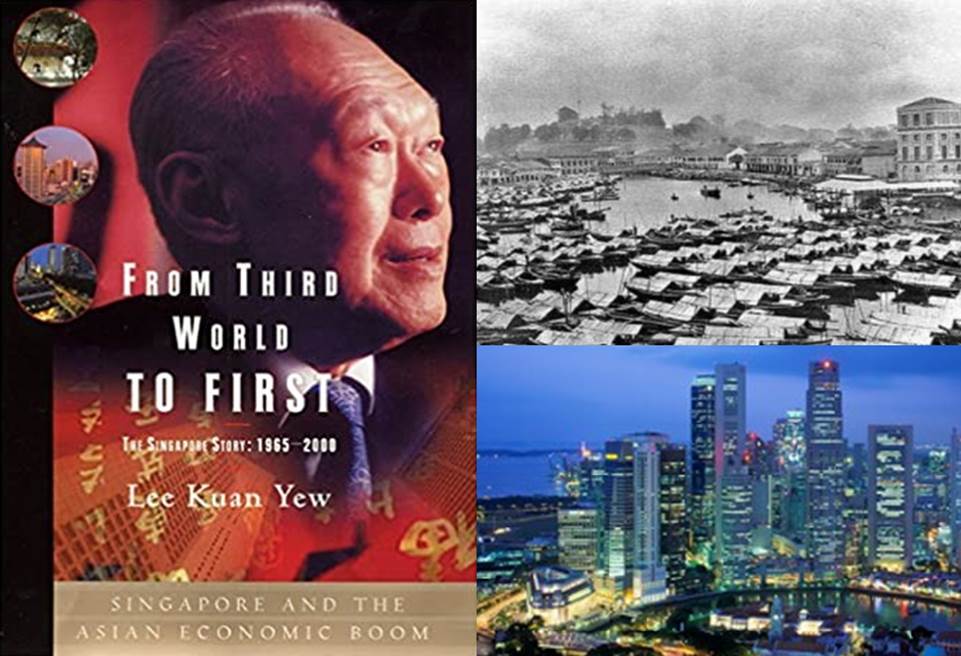
From Third World to First: The Singapore Story – Lee Kuan Yew’s Vision and the Policies That Transformed a Nation
Lee Kuan Yew’s 2000 autobiography From Third World to First: The Singapore Story (often published in two volumes or as a single comprehensive work) is more than a personal memoir. It is a masterclass in pragmatic statecraft, detailing how a resource-poor, ethnically fractious, geopolitically vulnerable island transformed itself from a malaria-ridden entrepôt with per capita GDP around $500 in 1965 into one of the world’s most prosperous, secure, and efficient nations within a generation. By the late 1990s, Singapore had achieved First World status in income, infrastructure, education, health, and public order, with one of the highest standards of living in Asia.
Lee’s narrative is unapologetically realist. He rejects ideological purity—whether Western-style liberal democracy, socialism, or laissez-faire capitalism—in favor of what works for Singapore’s specific context: a small, open city-state with a multi-ethnic population (Chinese, Malay, Indian, and others), no natural resources, and hostile neighbors after separation from Malaysia in 1965. The book chronicles political struggles, economic strategies, social engineering, foreign policy, and governance innovations. Below is a detailed survey of the major policies and themes, with analysis of their implementation, outcomes, and enduring lessons.1. Political Survival and the People’s Action Party (PAP) DominanceUpon independence in 1965, Singapore faced immediate existential threats: unemployment over 10%, acute housing shortages, racial tensions, and vulnerability to communism and communalism. Lee and the PAP responded with a highly centralized, disciplined political model.
  • Meritocracy and Clean Government: Lee insisted on selecting leaders based on ability, not connections or ideology. He created the Corrupt Practices Investigation Bureau (CPIB) with strong powers and political backing. Salaries for ministers and civil servants were raised dramatically to “pay them what they are worth” and deter corruption. Top civil servants and scholars were recruited aggressively. This built one of the world’s least corrupt administrations.
  • Suppression of Opposition and Media Controls: The book defends internal security measures, including the Internal Security Act (ISA) for detention without trial against communists and extremists. Lee argues that in a fragile multi-racial society, unrestricted democracy could lead to chaos (citing examples like Sri Lanka or Lebanon). Media was regulated to prevent racial incitement and foreign interference. The PAP maintained dominance through consistent performance legitimacy rather than outright repression alone.
  • Analysis: Critics call this “soft authoritarianism” or “illiberal democracy.” Lee counters that Western models were unsuited to Singapore’s vulnerabilities. The result was political stability, which proved foundational for long-term planning—something rare in post-colonial states.
2. Economic Transformation: From Entrepôt to Global HubSingapore’s economic policies are the core success story. Lee rejected import-substitution and embraced export-oriented industrialization, later shifting to high-value services and knowledge economy.
  • Attracting Foreign Direct Investment (FDI): Tax incentives, political stability, and world-class infrastructure drew multinationals. Labor was kept disciplined through the National Trades Union Congress (NTUC), which was aligned with the government rather than adversarial. Strikes were minimized.
  • Education and Skills: Heavy investment in technical and vocational education (ITE, polytechnics). English was promoted as the working language while preserving mother tongues. Scholarships and merit-based streaming ensured talent development. Later focus on universities and research (e.g., biomedical sciences, engineering).
  • Infrastructure and Logistics: Massive port development made Singapore the world’s busiest container port. Changi Airport became a global aviation hub. Jurong Industrial Estate and later high-tech parks.
  • Monetary and Fiscal Prudence: Strong reserves managed by the Monetary Authority of Singapore (MAS). Currency stability, low inflation, high savings via Central Provident Fund (CPF). No significant foreign debt.
  • Land Use and Urban Planning: Strict zoning, reclamation, and efficient public transport (MRT).

Outcomes: GDP per capita soared to over $20,000 by the late 1990s (and much higher today). Unemployment plummeted. Singapore became a leader in electronics, petrochemicals, finance, and shipping. Lee emphasizes pragmatism: copying what worked in Japan, Hong Kong, Taiwan, and the West, while adapting.3. Housing and Social Cohesion: The HDB MiracleOne of the most visible policies was the Housing and Development Board (HDB) public housing program.
  • Nearly 80-90% of Singaporeans live in HDB flats today. Started in the 1960s to clear slums and squatter settlements.
  • Home ownership was encouraged through CPF savings, subsidies, and long-term loans. This created a “stakeholder society” with asset-building.
  • Ethnic Integration Policy (EIP) later set quotas to prevent racial enclaves and promote mixing.
  • Upgrading programs kept older estates modern.
Analysis: Public housing was not just shelter—it was nation-building. It reduced inequality, fostered social stability, and gave citizens a tangible share in national success. Lee viewed property ownership as a bulwark against communism.4. Multiracialism and Social PoliciesSingapore’s population is diverse, and racial riots (1964, 1969) were fresh traumas.
  • CMIO Model (Chinese, Malay, Indian, Others): Official recognition of ethnic groups with policies tailored (e.g., Malay special rights in some areas, but overall merit-based competition).
  • Bilingual education and cultural preservation alongside national identity.
  • Family and Population Policies: Initially pro-natalist, then “Stop at Two” campaign in the 1970s due to overpopulation fears, later reversed with baby bonuses as fertility crashed. Lee wrote extensively on the dangers of low birth rates and the importance of eugenics-like graduate mother schemes (controversial and later adjusted).
  • Strict laws on public behavior: caning for vandalism, death penalty for drug trafficking, bans on chewing gum (later relaxed), littering fines. “Kiasu” culture channeled into productivity.
Lee stressed that culture and values matter. He admired Confucian emphasis on education, family, and hierarchy, while incorporating Western science and technology. He was critical of Western “decadence” and permissive individualism.5. Defense and Foreign PolicyA tiny island surrounded by larger neighbors required ingenuity.
  • National Service: Compulsory military conscription for males, building the Singapore Armed Forces (SAF) into a technologically advanced deterrent. “Poisonous shrimp” doctrine—make invasion too costly.
  • Foreign Relations: Pragmatic non-alignment evolving into strong ties with the US, UK, Australia (Five Power Defence Arrangements), while maintaining ASEAN relations and economic links with all, including China after Deng’s reforms. Lee cultivated personal relationships with leaders worldwide (Nixon, Reagan, Deng Xiaoping, etc.).
  • Water self-sufficiency efforts (reservoirs, NEWater recycling, relations with Malaysia).
Analysis: Defense spending remained high as a percentage of GDP, but it underpinned investor confidence.6. Governance Innovations and Long-Term Thinking
  • Anticipatory Government: Lee’s team scanned horizons for threats (oil shocks, recessions, demographic changes).
  • Civil Service Excellence: Competitive pay, performance culture, and rotation to prevent stagnation.
  • Urban Greening: “Garden City” vision transformed the concrete jungle.
  • Anti-Welfare Dependency: Emphasis on self-reliance, workfare over welfare. CPF for retirement, healthcare, housing.
Lee reflects candidly on mistakes (e.g., early population policy, some urban planning oversights) but emphasizes learning and adaptation.Critical Analysis and LegacyStrengths:
  • Ruthless pragmatism over dogma produced results few predicted. Singapore consistently ranks at the top of economic freedom, ease of doing business, education (PISA), and safety indices.
  • Social mobility was high in the early decades through education and housing.
  • Lee’s focus on human capital as the ultimate resource proved prophetic in a knowledge economy.
Criticisms and Trade-offs (as discussed or implied in analyses of the book):
  • High inequality persists despite low poverty; reliance on foreign labor creates tensions.
  • Political system limits contestation; some argue it stifles creativity long-term, though evidence is mixed.
  • Paternalism can feel stifling; younger generations push for more openness.
  • Demographic challenges (low fertility, aging) remain pressing.
Lee Kuan Yew was a voracious reader and learner who applied lessons from history (rise and fall of empires, failures of decolonization). He distrusted pure ideology, famously saying, “I am not interested in theories. I am interested in what works.” His governance style combined visionary leadership with granular attention to detail—down to tree planting and hawker center hygiene.Enduring Lessons for Developing Nations
  1. Institutions First: Sound governance and rule of law (adapted to local context) trump natural resources.
  2. Open Economy with Discipline: Global integration + domestic stability.
  3. Invest in People: Education, health, and culture shape long-term outcomes.
  4. Social Cohesion: Address ethnic/religious divides proactively.
  5. Adaptability: Policies must evolve; what worked in the 1960s-80s needs updating.
From Third World to First remains essential reading for leaders, policymakers, and students of development. Singapore’s story under Lee demonstrates that with clear-eyed leadership, disciplined execution, and willingness to make unpopular decisions, rapid progress is possible even against overwhelming odds. As Lee often noted, there are no guarantees—success requires constant vigilance. The island continues to navigate new challenges (technological disruption, geopolitical tensions, climate change) in the same spirit.
The book’s power lies not just in the policies detailed but in Lee’s character: intellectual honesty, toughness, and deep patriotism. It is both a historical account and a manual for turning vulnerability into strength.