Pages

Wednesday, January 18, 2006

Bamdev Gautam: January 20 On Schedule


I got to talk to Bamdev Gautam a few hours back for the first time. He said he was on his way to the bathroom for a bath, but he made time anyway. He was generous with his time.

He has an obvious political presence. He is articulate, he is fearless, he is staunch. He has been controversial in the past, like when he told the Russian ambassador in Delhi he was going to bury any and all in the same ditch. That was ages ago. And of course he split the UML at one point. That is past, and now the two are reunited and stronger than ever before.

I am so impressed with the UML right now. They seem to have this amazing ability to bring people out in large numbers. Political activists and leaders in America would envy these UML stalwarts. When someone brings 100,000 people to Washington DC, that is news for months, sometimes years.

The UML is a cadre-based party, and the democrat in me greatly admires that. And I like their practice of internal democracy. They will debate issues endlessly before some body like the central committee comes to a decision. I wish the Nepali Congress had that kind of a culture at the central level.

And of course I am settled on the Madhav Nepal name for Interim Prime Minister. It is a simple democratic arithmetic on my part. A Nepali Congress that has been vertically split is no longer the largest party in the country. And the UML sure has the momentum. And they are also best positioned to make sure the worst fears about the Maoists do not come true.

Bamdev Gautam though gives a clear impression some day he is going to be Prime Minister or President or Governor, some day he is going to be Commander In Chief. I think he is made for the executive branch. He had quite a stint as Home Minister.

Basically we talked about January 20. He said the Maoists have never infiltrated any rally, and they will not do it on January 20. And if the king and the army were to send RNA people to pose as Maoists, they will get exposed by the people. And that the rally will be in Durbar Marg, not in Baneshwar. The most restricted space is to be invaded.

He said the goal was to disrupt the February 8 polls. Toppling the regime was not an immediate goal.

He said it was not true Madhav Nepal said in Janakpur that the monarchy will come to an end in February.

I thanked him and his party for the clarity they have offered with their two words: democratic republic. And I thanked him for the huge UML rallies over the past so many weeks.

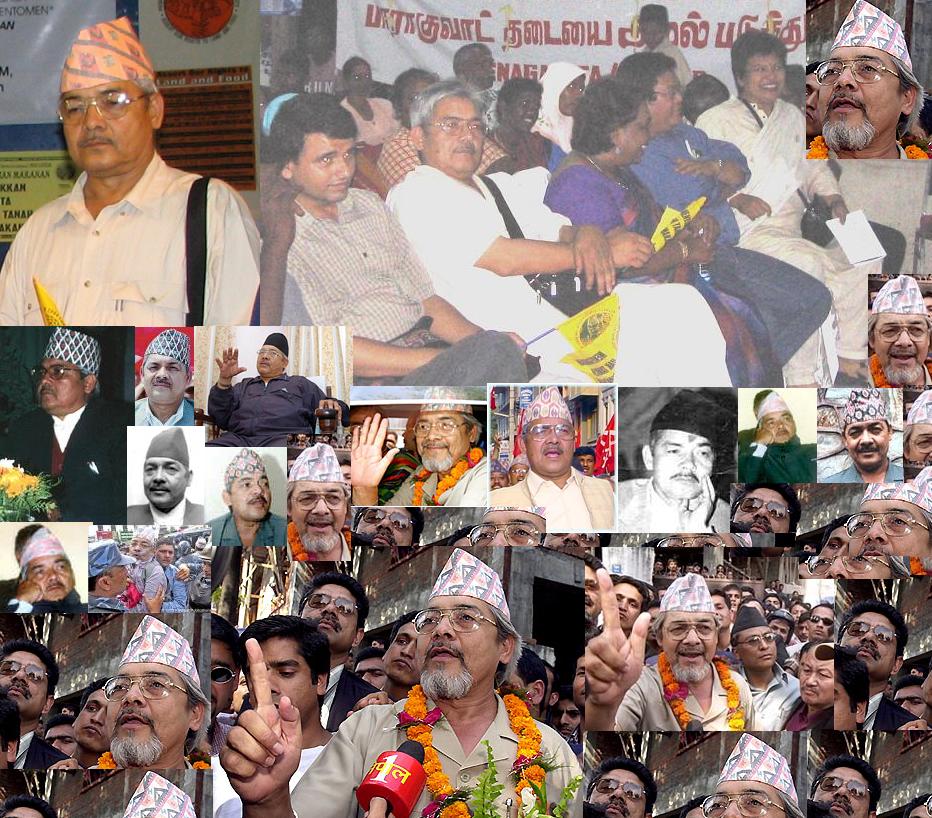
And then I went online to look for photos of Bamdev Gautam and found an interesting one where Shambhu Thapa and Gautam are in the same shot. I thought that was greatly interesting because these two remind me of each other. Both will be crucial to the success of this movement for a democratic republic.

प्रहार गरिहालौं

Podcasts

January 17, 2006 (7 minutes) I was on the phone with Bamdev Gautam. You can hear my voice, but not his though. I have not had the equipment. It is not like I did not visit the local Radio Shack. They did not have it either. Gautam said the January 20 protest rally will go on.

January 17, 2006 (8 minutes) My message to the Nashville gathering through Shyam Karki. Please donate $1500 for the pamphleteering project. The idea is to reach all wadas in the country.

In The News

Govt’s claims are baseless: Prachanda NepalNews ..... Prachanda, has dismissed government’s claim that the CPN Maoist guerrillas are planning to infiltrate Friday’s mass meeting being organized by the seven party opposition alliance...... has expressed commitment that his party will not indulge in activities including use of force, infiltration or any other provocative activities during Friday’s mass meet organized by the seven party opposition alliance...... The Maoist supremo has also termed the government’s ban on all type of meetings and rallies in the capital as “defeated mentality” of the government.....Prachanda’s statement has come hours after Home Minister Kamal Thapa claimed that the government had credible evidence that the Maoists were going to `infiltrate’ on Friday’s mass meeting..... Ian Martin, regretted the government’s decision to impose ban on peaceful assembly in Kathmandu and also sought clarification from the government in this regard. Govt. bars civil servants from taking leave till municipal polls "Of course, no civil servants and their family members want to take part in the conflict-prone municipal polls but the government is trying to force us. We have either to quit the job or obey the circular. We have been victimized," the report quoted a government official as saying.

Visitors

17 January16:58OARnet, Columbus, United States
17 January17:56Car Net, Croatia (Hrvatska)
17 January18:50State University of New Jersey, United States
17 January19:50Equant, France
17 January22:30Tarrant County College District, United States
17 January23:04United States Army, United States
17 January23:05United States Army, United States
17 January23:11United States Army, United States
17 January23:25United States Army, United States
17 January23:46York University, North York, Canada
18 January00:49Mercantile Communications Pvt. Ltd., Nepal

Tuesday, January 17, 2006

प्रहार गरिहालौं


राजाले तीन वर्ष मागे शान्ति स्थापनाकालागि। तर सात पार्टी र माओवादीको १२ सुत्रीय समझदारीले त्यो शान्ति अहिले नै स्थापना हुने देखियो। त्यो राजालाई मन परेन। चाँडै शान्ति आए आफ्नो रोडम्याप नै डिस्टर्ब हुने डर भएछ राजालाई।

त्यस्तो गल्ती हामीले नगरौं। प्रचण्डले नया वर्ष सम्ममा यो सत्ता ढाल्ने भनेका छन्। माधव नेपालले जनकपुरमा भन्नुभो राजतन्त्र फरवरीमा समाप्त हुन्छ भनेर। तर राजाले जनवरी २० को बृहत् रैली बिथोल्न कर्फ्यु आदि इत्यादिको घोषणा गरेका छन्।

जनवरीमा नै यो सत्ता ढाल्ने प्रयास किन नगर्ने? जनवरी २० मा रैली गर्ने, र त्यसै रैलीलाई डोर्याउँदै डोर्याउँदै लगेर नारायणहिटी घेर्ने। यो सरकार नढलेसम्म नारायणहिटी घेरिराख्ने।

पाँच देखि १० लाख मान्छे चाहिन्छ। नेपाल मेडिकल एशोसिएशनले र नेपाल बार एशोसिएशनले आ-आफ्नो क्यामप गाड्ने। घाइते हुने मान्छेकालागि स्वास्थ्योपचार, सरकारी दमनको रेकर्ड तयार पार्ने काम सबै गर्न पर्यो। नत्र कमल थापालाई जेल कसरी पठाउने?

म त भन्छु प्रहार गरिहालौं। शुभ काममा विलम्ब किन?

(जनवरी १७, २००५)

अइ आन्दोलनमें मधेशी अधिकारके बात

कोइ कहइ छइ लोकतन्त्रके लडाईमें मधेशी अधिकारके बात कएलासे आन्दोलन डिस्टर्ब होतइ। हम कहइ छियई होतइ त होतइ। २०४६ सालके आन्दोलनमें देशमें प्रथम शहीद भेलइ धनुषाके यदुकुहासे। लेकिन ओइके बाद जे सम्विधान अलइ ताइमें मधेशी समुदायके साथ विश्वासघात भेल् छइ। से गल्ती अइ बेर न हइ दोहराबेके। हाले जनकपुरमें सात पार्टीके आम सभा भेलइ। नेपालके इतिहासमें ततेक् बड्का आम सभा कहियो न भेल् छलइय। उ तीन लाख मधेशी १३ लाख पहाडीके हौसला बुलन्द करि रहल छइ, आ आहाँ कहबई ओइ मधेशीके चुप होबे के त केना होतइ? देखइ छियइ कतेक् मधेशी सब पढिलिखके बुरिया जाइत् रहइ छइ।

लोग कहइ छइ दलित, मधेशी, जनजाति, महिला। सेहे बात त हमहुँ कहइ छियइ। लेकिन हमरा बुझाइत् रहइय नेपालमें पहाडी-मधेशी वाला मुद्दाके सामनें बाँकी सब मुद्दा फीका परि जाइ छइ। सामाजिक न्याय बेगरके लोकतन्त्र कोनो लोकतन्त्र थोरे भेलई? आ ओइ सामाजिक न्यायके मुद्दामें सबसे नम्बर एक मुद्दा जे छइ, तही पर अगर छलफल न होतई त उ लोकतान्त्रिक आन्दोलन केना भेलई?

हम त जतेक् पहाडी सब हइ आ ओक्कर पिछ्लग्गु मधेशी सब हइ तेक्कर सबके काम आसान क देनें छियइ। हम त एगो संविधाने लिख् देनें छियइ। सहमति असहमति जाहेर करेके सबके मौका दे रहल छियइ।

Proposed Republican Constitution 2006

दुनियाँ भरमें छिरियाइल मधेशी सबके अप्पन अप्पन मानसिक दासतासे मुक्ति पाबेके इ आन्दोलन एगो सुवर्ण मौका ही छई। प्रवासी मधेशी सब अइ आन्दोलनके सहयोग कके नेपालमें रहि रहल लोगके गुण न लगा रहल हई, बल्कि खुद् मुक्ति पा रहल हइ।

देखइत् रहइ छियइ कतेक् पहाडी सब मधेशी शब्द तक उच्चारण करे से इन्कार करइत् रहइ हइ। सडलपाकल दिल हइ तेकरा सबके। उ सब सामाजिक प्रदुषण पैदा करइत् रहइ छइ। उ सामाजिक प्रदुषण प्रवासमें भी छइ। मुक्तिके लडाइ त प्रवासमें भी छइ। विदेशमें त अप्पन अप्पन सबके क्यारियर रहई छइ, दाल रोटीके सवाल प कोनो पहाडीके दाल न गलइ छइ, तइयो देखइत् रहइ छियइ कतेक मधेशीके मधेशी अधिकारके बात करे में जेना डर लगइत् रहइ छइ। मानसिक दासता एगो हिस्का जिका भ गेल् रहइ छइ। जेना कतेक् लोग नेंओ चिबबइत् रहइ छइ।

नेपालमें डेढ करोड मधेशी दोसर दर्जाके नागरिक भ के रहि रहल हइ। प्रवासमें मधेशी सब पहाडी सामाजिक सर्कल् सबमें दोसर दर्जाके सामाजिक प्राणी भ के रहि रहल हई। दुन्नुके स्थितिमें बहुत ज्यादा अन्तर न हइ।

कोनो पहाडी आहाँ प्रति पहाडी-मधेशीके फिलिङ करइय त उ त आहाँके माइ बापके गाली दे रहल हबे, कि नइ? आहाँके परिवारके, आहाँके घर अङनाके, आहाँके गामके, आहाँके दुरा दर्वज्जा सबके गाली दे रहल हबे। से आहाँ कइला बर्दास्त करि रहल छियइ? अप्पन भाषा, संस्क्रृतिके अपमान आहाँ केकरा पुछिके सहि रहल छियइ?

समानताके इ लडाइ आहाँ लडियउ, आ से जे नइ करबइ त वहे लडाइ आहाँके बालबच्चाके लडे पडत्। नेपालके इ लोकतान्त्रिक आन्दोलन आ ओइ भितरके सामाजिक न्यायके लडाइ ततेक् महत्वपूर्ण छइ। समय दे सकइ छियइ त समय दियउ, पैसा दे सकइ छियइ त पैसा दियउ, राजनीतिक रूपसे सक्रिय भ सकइ छियइ त से होइयउ।

लोकतन्त्रके नारा आ मधेशी अधिकारके नारा बिल्कुल साथ ले जाएके हइ। आन्दोलनके अन्तर्गत जे पहाडी आहाँके साथ समानताके व्यवहार न करइय उ आन्दोलनकारी नइ भेलइ।

(जनवरी १५, २००५)


लोकतान्त्रिक गणतन्त्र नै किन?

लोकतन्त्र दुध हो भने राजतन्त्र विरालो हो। दुधको साक्षी विरालो हुन सक्दैन। ज्ञानेन्द्र शाह व्यक्तिको जहाँसम्म सवाल छ, उनी एउटा नागरिक भएर, व्यापारी भएर बसुन्। उनको निजी सम्पत्ति बरकरार रहन्छ। शौख नै लाग्छ भने पार्टी खोलुन्, राजनीति नै गरुन्। तर जन्म कै आधारमा कसैले गद्दी पाउने हो भने आज पशुपति राणा शायद प्रधानमन्त्री हुने थिए।राणा शासन र शाह शासनमा के फरक?

जनताले जनताकालागि जनताद्वारा शासन गर्ने प्रणाली लोकतन्त्र हो भनेर अब्राहम लिन्कनले भनेका छन्। महात्मा गान्धीले स्वराज्यको कुरा गरे। नेपालमा राजतन्त्र भनेको आन्तरिक औपनिवेशवादको रुपमा रहिआएको छ। हामीलाई ब्रिटिशले त गुलाम बनाउन सकेन, तर राजतन्त्रले गुलाम बनायो। त्यो कतिन्जेलसम्म?

प्रत्येक १० सालमा राजतन्त्रलाई भोक लाग्दो रहेछ र त्यसले घ्वाम्म पारेर लोकतन्त्रलाई चपाएर खाइदिने गरेको छ। राजतन्त्र संस्था भनेको त राक्षस हो। त्यो दानव हो। त्यो संस्थाको समाप्ति हुनु जरुरी छ। लोकतन्त्र भनेको त्यो दानवको पन्जामा रहेको राजकुमारी जस्तो। त्यो राजकुमारीलाई त्यो पन्जाबाट मुक्त गर्नु जरुरी छ।

राजतन्त्र यस्तो काम नलाग्ने संस्था हो कि त्यो संस्थाबाट राजा खुदले मुक्ति पाउनु जरुरी छ। राजतन्त्रले राजालाई शक्ति देला, तर स्वतन्त्रता दिंदैन। र त्यो शक्ति पनि शोसन गर्ने शक्ति हो, सेवा गर्ने शक्ति होइन। सेवा गर्ने शक्ति जनताले मत खसालेर प्रदान गर्छन्।

देशलाई चाहिएको आर्थिक क्रान्ति हो। तर देश राजनीतिक क्रान्तिमा नै फँसेर बसेको छ। लोकतन्त्र बिना आर्थिक क्रान्ति संभव छैन। गरीबी निवारण लोकतन्त्र बिना हुँदैन। दलित, मधेशी, जनजाति र महिलाले पाउनु पर्ने सामाजिक न्याय लोकतन्त्रले नै प्रदान गर्छ।

यो देश तीन करोड नेपाली जनताको हो, एउटा राजाको होइन।

तर लोकतन्त्र सित्तैमा आउँदैन। त्यो राजाले अथवा विदेशी शक्तिले उपहारका रूपमा प्रदान गर्ने कुरा होइन। त्यो नेताहरूले पनि उपहारका रूपमा दिन सक्दैनन्। लोकतन्त्र खटेर कमाउनुपर्छ। लोकतन्त्रले परिश्रम माग्छ, लोकतन्त्रले बलिदान माग्छ।

नेपालको अहिंसात्मक आन्दोलन अब निर्णायक घडीमा पुगेको छ। देश अथवा संसारमा त्यस्तो कुनै तागत छैन जसले यस आन्दोलनलाई अब रोक्न सकोस्। यो चरो अब उडिसक्यो। यस आन्दोलनले सारा आकाश गुञ्जायमान बनाएको छ। मेचीमा लागेको नारा महाकालीमा सुनिएको छ।

जनताले जनताकालागि संविधान निर्माण गर्ने सबैभन्दा उत्तम तरिका संविधान सभा हो। त्यसैले यो आन्दोलनले संविधान सभाको लक्ष्य राखेको छ। त्यो संविधान सभा एक मात्र मिलन विन्दु हो। त्यसमा कुनै राजनीतिक पार्टी आउँछन् भने आउन् आउँदैनन् भने डाँडा काटुन्, माओवादी आउँछन् भने आउन् आउँदैनन् भने डाँडा काटुन्, राजा आउँछन् भने आउन् आउँदैनन् भने डाँडा काटुन्।

लोकतन्त्रको घेरा भित्र विभिन्न किसिमका समझदारीहरू हुन सक्छन्। तर लोकतन्त्रको सवालमा कुनै समझदारी हुँदैन।

यो लोकतन्त्र भारत अथवा अमेरिकाबाट आयात हुन लागेको होइन। यो नेपाली माटोले जन्माउन लागेको हो। स्वतन्त्रता र स्वाभिमान प्रत्येक आत्मामा, प्रत्येक दिल र दिमागमा बीउको रुपमा बसेको हुन्छ। कहीं फस्टाउन पाएको हुन्छ, कहीं पाएको हुँदैन। फरक त्यति मात्र हो। यो लोकतन्त्र नेपालीहरुको दिलको आवाज हो। यो लोकतन्त्र यस्तो चलचित्र हो जो जस कसैले पनि आँखा चिम् गरेर हेर्न सक्छन्।

संभव छ नेपालको आन्दोलनले एउटा यस्तो किसिमको प्रगतिशील लोकतन्त्रको सिर्जना गरोस् कि त्यो लोकतन्त्र निर्यात नै गर्न सकियोस्। अमेरीका र भारतले नेपालको लोकतन्त्रबाट सिक्न सक्ने अवस्था सिर्जना हुन सक्छ। किनभने नेपालमा माटो गीलो छ। यस्तो मौका हम्मेसी पाइँदैन। यस्तो मौका कु्नै पनि देशको इतिहासमा शायद एक पटक आउँछ। त्यसैले यो आन्दोलनमा लागिपरेका देश र विदेशका प्रत्येक व्यक्तिले आफुलाई भाग्यमानी मान्नुपर्छ।

(जनवरी १३, २००६)


तिमी सडकमा उत्रेको देखेको छु

न्यु यर्क कहिले ननिदाउने शहरमा
इन्टरनेट मेरो पर्दा नलाग्ने झ्याल भएको छ
टाढैबाट भए पनि
सडकमा तिमीले जुन स्वतन्त्रता संग्राम मच्चाएका छौ
त्यसलाई मैले यहाँबाट नै प्रणाम गरेको छु
रगताम्मे निधारमा मैले भोलिको नेपाल देखेको छु
महिला पुरुष एक भएर, विद्यार्थी बुज्रुक एक भएर
तिमीले देखेको सपना, हे योद्धा
साकार हुन्छ, अवश्य हुन्छ
किनभने स्वतन्त्रता बाहिर मानवताको कुनै अस्तित्व छैन
तिमी त्यहाँ होस्टे गर, म यहाँ हैंसे गर्छु
तिमी भन इन्किलाब, म भन्छु यहाँ जिन्दाबाद
तिमी भन तानाशाही, म यहाँ भन्छु मुर्दाबाद
तिम्रो निधारको रगत बिहानीको सुर्य हो
क्षितिजमा त्यो आइसकेको छैन, तर सारा आकाश रगताम्मे छ
त्यो विहान अवश्य आउँछ
त्यो नीतिको नियम हो
वाग्मतीको पानी कसले रोक्न सक्छ
कोशी जहिले बगेकै छ
स्वतन्त्रता त्यस्तै एकोहोरो हुन्छ
लोकतन्त्रको आवाज शंखनाद हो
यो मेघ झैं गर्जन्छ
अहिंसा भनेको अणु बमभन्दा भयानक हतियार हो
यदि त्यो स्वतन्त्रता सेनानीको हातमा पर्छ भने
हे वीर योद्धा
तिमीलाई मेरो सलाम
तिमी भन त्यहाँ इन्किलाब, म भन्छु यहाँ जिन्दाबाद

(अक्टोबर ४, २००५)

Monday, January 16, 2006

Dipta Shaha Is For February 8 Polls, I Am Against


Dipta Shaha was a few years junior to me at high school. We have always got along just fine as we do today. I need to say that first. Because that knowledge elevates the debate, and the readers have a right to know perhaps. We are people who get along. And I do think Dipta Shaha is for democracy. It is just that we disagree on the true nature of the Maoists, that of the current regime, and as to what democracy means in Nepal's context, and we greatly diverge as to our trust levels of the seven party alliance. But that does not prevent me from admiring the lucidity with which he writes, or the sound arguments he presents. I am thankful for this opportunity of being able to debate him. He emailed me the article. I informed him I was taking it to debate.

The Four Major Powers India, China, America And Dipta

Dipta, your very title suggests you are for democracy. You are not for autocracy. You are not for an executive monarchy. You are not for military rule. That is your stated position. That does narrow down differences a bit. But then we diverge. One of us sure does not seem to grasp the basics of democracy. And I would like to argue here that person is you.

I am for boycotting the February 8 polls because (1) it is being conducted by this regime that I consider illegitimate, (2) after the king did not reciprocate the ceasefire and did not treat the 12 point agreement between the other two forces as a starting point for dialogue with them, now I am staunchly for a democratic republic, so I am no longer thinking in terms of a constitutional monarchy, because that is what peace and democracy mean to me, (3) I accept the seven party alliance as the legitimate leader of the democratic forces in the country and they are for it, and it is the democratic camp that is my political home, (4) it is my political analysis and firm conviction that only a constituent assembly is a meeting point for the three forces in the country, and (5) I as a Madhesi am for a constituent assembly with or without the Maoists: the 1990 constitution betrayed us.

Elections happen in democracies. Democracies are not possible without elections. Those two statements are true. But just because a country holds elections and hence it is a democracy, that just is not true. Pakistan is an example.

Mahendra was a virus. Gyanendra is a mutated virus, but a virus nevertheless. Who ever elected Gyanendra?

I gave some time to Fernando Ferrer when he unsuccessfully ran for Mayor of New York City a few months back. His Republican opponent used scare tactics to rally the crowd behind him. Federal officials denied, but Bloomberg kept insisting there were terror threats against the city subway system. (Bloomberg: No Mr. Security) That was a right wing thing to do. If you can get the people scared enough, they will come under your thumb. Now that elections are over, all those extra police personnel are gone. Suddenly the city has become safer.

I think the king uses the Maoist threat the same way.

I know what the Maoists are. I have been one of the few people - perhaps one person - to have really talked to the Maoists at an ideological level. I have tried to incorporate their emphasis on classlessness in the constitution I have proposed for the country. (Proposed Republican Constitution 2006) I would not be surprised if I have read up on the Maoist ideology more than Gyanendra and Pyar Jung put together.

I know what "power flows through the barrel of a gun" means.

But if they be an ideological group that is willing to evolve, why is the king opposed to the idea of such an evolution? If they are a violent group incapable of change, is the idea to physically exterminate them? How many of them are there? Is it possible to physically exterminate them? Do they derive their power more from their ideology than their gun? And if they do, even if they are not capable of change, are not ideologies political advents? And so does that not show there is only a political solution to the insurgency?

Even if the Maoists are not capable of giving up on classic Maoism, the solution is still to engage them at an ideological level, politically. Expert upon expert has said there is no military solution. If the king disagrees, he should say why.

Even if there were a military solution, it should not be sought, that is what I think. Because lives will still be lost on both sides, and that will be such a waste.

The reason we have to talk about this at length is because it makes no sense to hold any kind of polls as long as the Maoist insurgency is still rife and so widely on that.

The king is in denial.

He is also perhaps incapable of making a jump from seeking a military solution to seeking a political solution. And even if he were to decide to seek a political solution, he lacks the political skills. And if he were to delegate the task to those around him, he has surrounded himself with people whose careers come to an end for life as soon as democracy is established in the country, so none of them see it in their self-interest to seek a genuine solution to the insurgency. They need a low intensity war to go on indefinitely.

Let's face it. The king is a militarist.

For the king to say the autocracy in the country will get worse if the parties do not rubber stamp his 2/1 move by participating in the polls is like the racists in the US South telling blacks they should not complain or the racism might get worse!

Is it technically possible to hold the elections? Why are we even asking that question?

The king obviously does not know one end of the cow from another. He does not know democracy. He does not know human rights. He does not know elections. How can you relentlessly attack free speech and claim you are for democracy? How can you take the global lead on human rights abuses and claim you are for democracy? Unless you are fundamentally dishonest, or you have a fundamental character flaw? That leaves some room for the possibility that maybe the king believes his own lies.

February 8 does have its democratic benefits. It strengthens the seven party alliance and it cements the civil society with it. The Maoists also get closer to the alliance. The international community gets to witness the farce, and they will end up even more disgusted with this regime's histrionics. February 8 further isolates the king. There will be a total bipolarization. But that's about it.

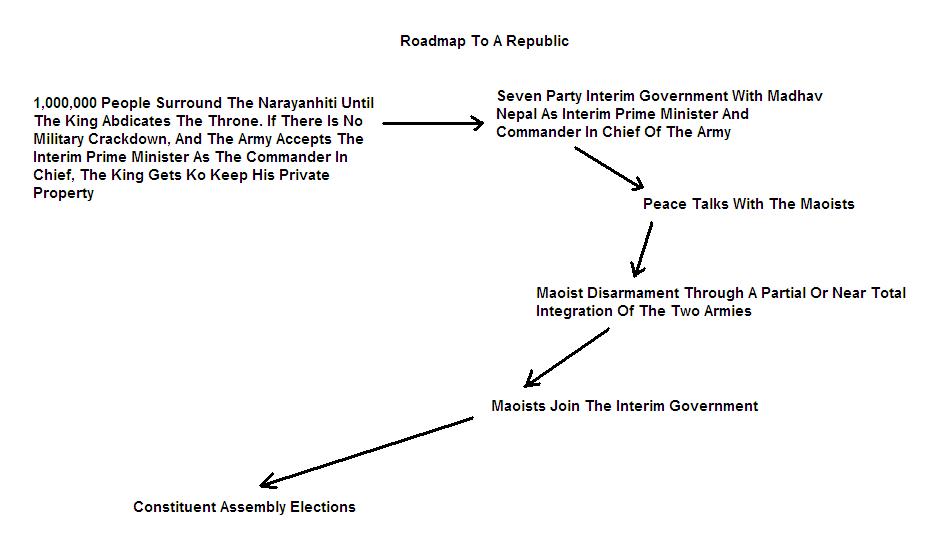
Or the regime could fall before that. The news today is of curfews and banned protests inside the Ring Road, designed to foil the January 20 rally. That could be the beginning of the decisive phase when a million people surround the Narayanhiti until the king abdicates the throne.

And we will both be spared this debate!


Poll Opponents Further Autocratic Designs

- Dipta Shah

Advocating a one-sided view is completely within an individual’s right. But for the view to be credible, it must be substantiated by supporting evidence, not rhetorical questions or conjecture. Inadvertently, the superimposition of selective individuals’ rights’ to pass as collective will is where the logic presented by opponents of planned elections falters.

The basic thrust behind opponents of municipal polls is the fear that if held, such elections may “legitimize the February 1 putsch.” If the legitimization of February 1 is of primary concern, how do municipal poll opponents reconcile their demand for peace and democracy (at the earliest opportunity) with their rejection of a fundamental democratic enabler? How better to move towards democracy and peace than to re-invigorate the democratic process and resurrect civilian bodies to enforce law and order?

Opponents of municipal polls claim that the current government has no “right” to hold elections (in the name of democracy and peace). By extension of this logic, it’s not just the present government, but all governments (and public office aspirants) that do not have the said “right.” Qualifying general shut-downs and the forced closure of educational institutions with a call for peace and democracy are also abuses of certain “rights.” What justification is there for those who wish to infringe upon others’ “right” to vote?

As for speculation regarding whether municipal polls will represent popular will or yield tangible results, there’s only one thing to be said: One will never definitively know unless elections are held.

If opponents of municipal polls are under the illusion that the will of the 7-Party leadership and their cadre substitute for collective national will (or that voter turn-out and vote counts will be intangible), they are mistaken. Such individuals may want to interact with workers from the 7 Parties and probe what progress (or lack thereof) has been made in attempts to incite the public (over the past 3 years).

The claim that the King hoodwinked the political parties (and continues to do so) may hold some merit. However, public apathy at the Parties’ call to inundate urban centers demonstrates that the general public is not as easily hoodwinked by spent political masters.

That the 7 Parties have no choice but to rely on forced Maoist support (to demonstrate turnout at their VDC-level programs) is an indictment of the lack of public faith in Party leadership. The only fool-proof means available to challenge this claim is to hold elections. Of course the antithesis of this logic holds that the only way to keep the truth from emerging is to boycott (or prevent) elections.

Even the staunchest opponents of municipal polls readily admit that elections are quintessential to a democratic set up. Where such admissions falter is when the same opponents claim that the act of holding elections does not qualify a state for democratic status. Clearly, this is a circular argument that leads to academic discussions over “degrees of democracy.”

But no matter how the argument proceeds, the basic premise that elections are integral to democracy, remains. So what’s better? Holding municipal elections (that form the basis for Parliamentary elections) or not having elections at all? Arguing in favor of the latter may be a “hard sell,” especially in light of the fallacious logic this argument rests on: Elections cannot be free and fair unless they are held by “us” and not “them.”

Some opponents of the upcoming municipal polls are quick to recommend elections to a constituent assembly as an alternative. While in theory this recommendation holds merit, some practical issues arise.

For example, if held now, will a constituent assembly not resurrect the same group of people who one, were crucial in engineering the King’s ascendancy to power and two, who opted for violence over participation in democratic processes? What time-frame will elections to a constituent assembly require? Are armed Maoists to be accepted as members of an interim government? Why the push to draft a new constitution when constitutional amendments can achieve the same results? Which body is to supervise such elections?

For many municipal poll opponents, the answers to the questions above are found (with great optimism one might add), in the beaureacratic mess that is the UN system. No doubt, there are some areas where the UN’s services are unparalleled. Unfortunately, peace making is not one of them. And, in Nepal’s case, neither is solving the Bhutanese refuges crisis.

Eternal optimists who view the UN as an agora of instant solutions may like to re-visit the UN’s performance in peace making and peace building operations. Case studies can be found on Somalia, Sarajevo, Kosovo, Rwanda and Iraq. For an international body that has proved ineffective in solving even non-violent issues in Nepal, unflinching faith in the UN’s ability to lend resolution the Maoist insurgency (and subsequently hold elections), is suspect.

All too often, opponents of the upcoming elections resort to glorifying the 7-Party’s boycott of polls and the Maoists’ threat to exact “people’s punishment.” Should the Maoists’ revert to their previous tactics of assassinating political opponents, individuals who knowingly sanctify such behavior are on record for indirectly encouraging such violence.

Municipal poll opponents would fare much better if they presented the public with facts rather than contradictory, circumstantial evidence. Should Party leaders’ categorically own up to their past blunders and publicly propose transparent methods to prevent future abuses, public support may still be decisively won over.

Furthermore, should the 7-Parties truthfully explain to the public that they are unable to contest polls outside of Kathmandu, even this approach would generate empathy. However, a rejection of polls based on the fear of legitimizing the February 1 takeover is bound to be counterproductive to the Parties’ already tarnished image – domestically and internationally.

Also, the amount of promotion that opposing municipal polls does for absolutist designs, is inexplicable. It’s superficial stands like these that resonate democratic intent but subtly encourage autocratic extensions. For any autocrat (anywhere in the world), what better opponents to have than those who reject polls designed to empower the people? What better enemies than those whose interest in self-preservation outweigh those of an autocrat’s?

Without a doubt, after towing the 7-Party line and rejecting polls, opponents of upcoming elections will be at the helm of conspiracy theories (should results favor those loyal to the current government). Whose fault will it be then for not having participated in elections? How much analysis is required to understand that uncontested candidacy implies guaranteed victory? Furthermore, what good can possibly come out of delaying scheduled polls?

It is foolish to think that a rejection of polls has not been factored into the “grand design” – the best of luck to those who feel they are undermining autocratic aspirations (and augmenting their own) by rejecting polls.

In The News

Parties to continue peaceful protest despite the government's prohibition NepalNews
Home owners ask government offices to vacate their houses: Report
Seven party alliance speed-up anti poll drive
Parties urge Maoists to follow 12-point agreement

Visitors
16 January18:24Level 3 Communications, Chicago, United States
16 January19:25Comcast Communications, Alexandria, United States
16 January19:30KNIC, Korea
16 January20:15Comcast Communications, Elkridge, United States
16 January21:23Northern Arizona University, Flagstaff, United States

Here flies the Government coffers to Palace

Kathmandu: This is a story how palace takes advantage of states weak coffers at a time when the country has no parliament and no one to strictly monitor the flow of budget into palace.

The palace drew large chunk of money from Finance Ministry under different unrealistic headings. For 2060/61 money allocated for the palace was more than 320 million rupees, which is already a huge amount for the poor country. But it is unknown under which headings the palace drew the money. According to the information, for the Kings medical checkup palace took more than 30 million rupees, but it is not revealed the medical complications of the king. The palace has expended 1 million Rupees for a Rice feeding ceremony of new born prince, and similarly has lavishly spent 10 million rupees for the marriage ceremony of princess. Report shows that Palace spent 14 million rupees for purchase of special car made by BMW Company, Germany.

Likewise Kings Kin Helen Shah hit the controversy as she surprisingly drew large amount of money for her medical treatment. Note to mention Helen Shah owns a large business houses. It’s sad that palace and its’ relatives are actively involved in digesting the fragile states treasury and turning it into a milking cow. Here’s the list obtained from Finance Ministry;

Spending of 200 million rupees within seven months

S.N Date (BS) Title Amount (Rs)
1 2060/5/1 Medical Check up for King 4.8 million
2 2060/5/1 Medical Check up for King 31.91678 million
3 2060/7/3 For assigning caste and naming of Princess 0.4375 million
4 2060/7/7 Medical Check up of Princess Sitashma 0.1553 million
5 2060/7/12 Marriage Ceremony of Princess Sitashma 800 thousand
6 2060/7/17 Naming of Prince 0.5053 million
7 2060/7/26 Marriage Ceremony of Princess Dilasa 12.44 million
8 2060/7/28 Birthday Celebration of Princess Kritika 0.875 million
9 2060/9/21 Purchase of Special Car 135.055 million
10 2060/10/12 Differed amount for Purchase of Special car 3.22 million
11 2060/10/13 Rice feeding ceremony of Princess 0.656 million
12 2060/10/21 Purchase of gold for Princess Kritika 0.539 million
13 2060/11/12 Medical examination of Helen Shah 4.278182 million

Total Expenses 193.4935 million

Symposium At Columbia


My Proposal To The Saturday Symposium At Columbia
Anand Bist, Troublemaker

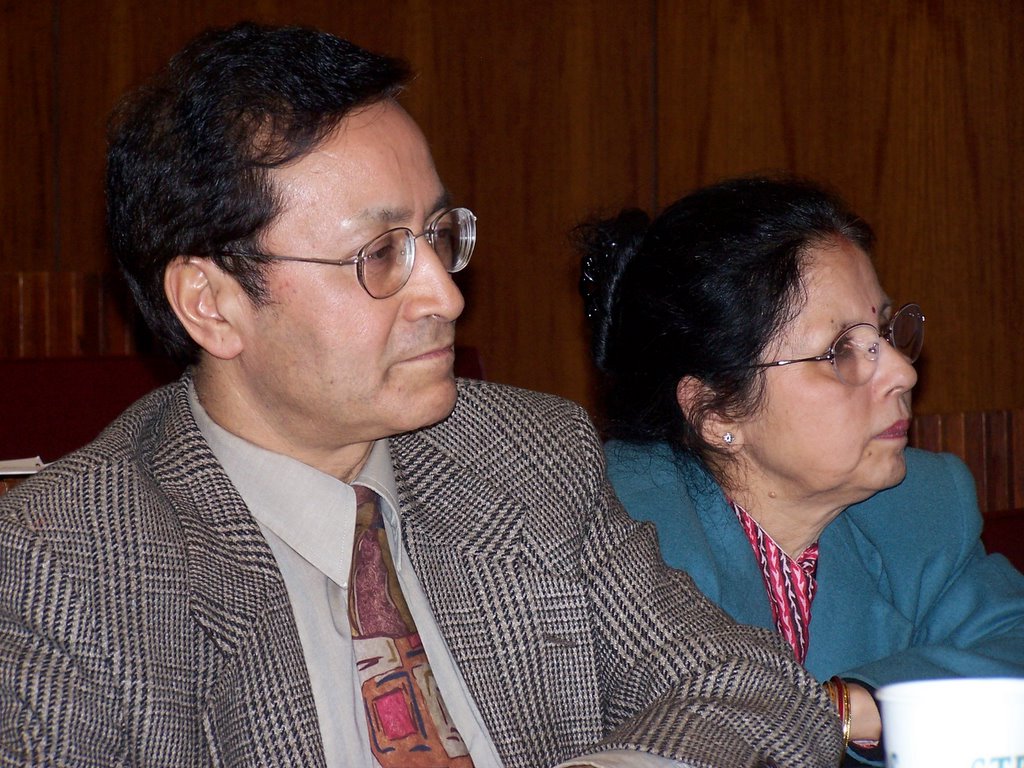
I was so excited I could hardly sleep the night before. I dozed off for a few hours during the wee hours of morning. I was the first person to show after Niraula and Son. I showed up half an hour early. Sometimes they do construction work during the weekends, so I made time for train delays, but there were none.

Dr. Tara Niraula is one of those establishment figures on the Nepali scene in the city. Plus he speaks with the perfection of those who host cultural programs, announcing song and dance sequences. Dr. Niraula teased me that he was telling someone the evening before that I might be the first to show.

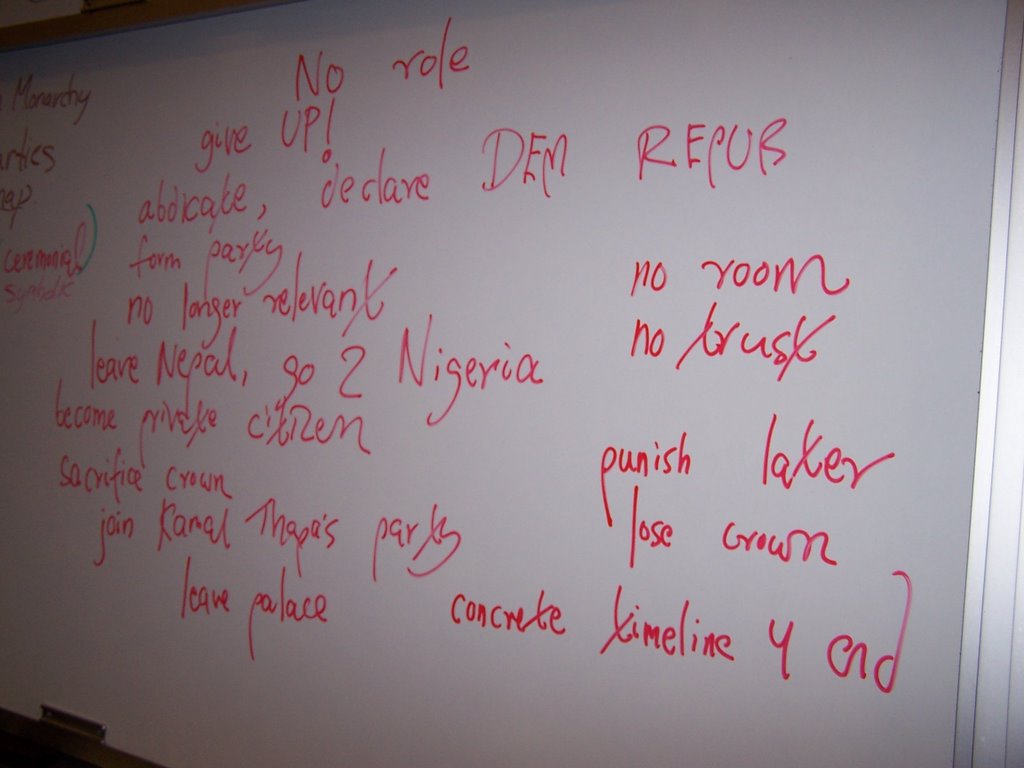
The setting was great. The format was excellent. It was not like you go sit and all these brainiacs try to fill up your empty brains. It was interactive. There were moderators, and some of us volunteered to provide slave labor to write ideas down on the white board as they got read out. But mostly everyone participated, literally everyone, not just the lound and vocal ones. There were specific topics. And you had a folder, and pieces of paper. For each topic you were given 10 minutes to write down all your ideas. All got collected. Then the moderator read them out and the ideas got written down on the road for all to see. Then discussions would ensue for about 40 minutes.

This format made it possible for it to be an all day event and still worth it.

And there was classy New York pizza for lunch. Breakfast was available. Tea, coffee, bakery products. Sweet stuff.

Dignitaries like Shyam Karki and Murari Sharma showed up. Also a bunch of the professorial class, like Shiva Gautam who teaches at Harvard. Names I had encountered online I was meeting in person.

"Now I need to meet that other celebrity diplomat, Kul Chandra Gautam," I teased Murariji at the end, on our way out.

Shyam Karki came to the US before Microsoft got founded. He is one of those establishment Nepalis on the national scene going international. He is a pleasant person. He was in Rochester for a long time, now in Baltimore. He knows Congressman Walsh (Write A Thank You Email To Congressman Walsh). Walsh speaks Nepali, has done a Peace Corps stint in Nepal, and has a soft spot in his heart for Nepal.

Shyamji praised my handwriting during the topic he moderated. Neki aur poochh poochh.

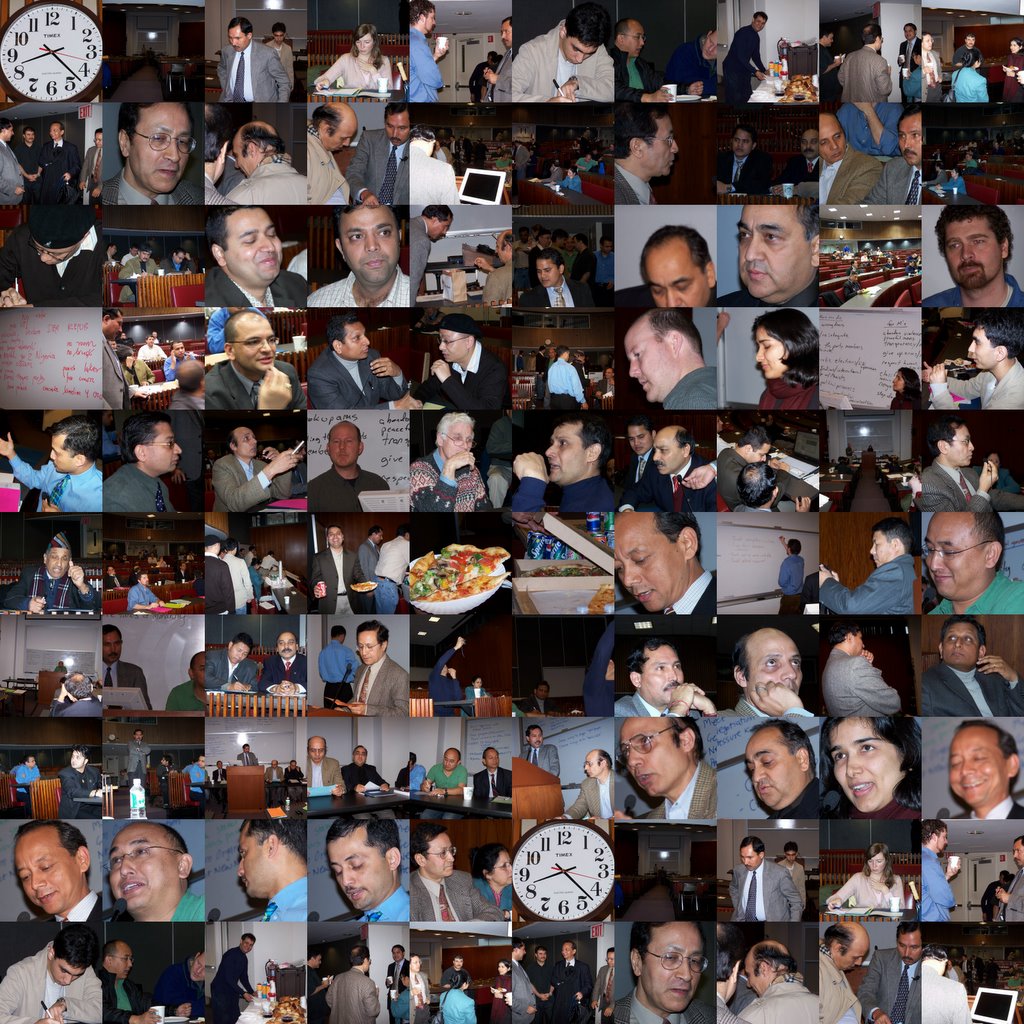
I took a ton of pictures. More importantly I was on assignment by Samudaya to record the entire event on audio which I did. All that will be online soon. So I am not going to talk too much about the substance of the discussions. Get your own taste of it on audio.

It was a pleasant and productive day.

I got to meet a movie star, Sudhanshu Joshi. How often does that happen? He has this Rajesh Hamal air about him. He got his training in New York. He makes movies both in Nepal and in the US.

There were hard core republicans like Anil Shahi, Sanjaya Parajuli and Deepak Khadka, but there was also a lot of sentiment for a ceremonial monarchy. Me? I am staunchly republican after the king wasted the ceasefire. My point being you can not offer a ceremonial monarchy to a king who clearly wishes an activist role for himself.

I told a few people I was Laloo Ka Aadmi. "All you say here gets reported to Laloo!"

Many good ideas came out. But at the end of the day you are only offering moral support to the democracy movement in Nepal. I am sorry the crowd did not come strongly for providing logistical support to the movement. The day was not designed to end with that conclusion either. But I think a lot of the shift will take place in follow-up emails and phone calls. Lets' put it this way: the work is being done. Money is being raised, projects are being implemented. Details are being discussed on a need to know basis.

Sometimes you do have to think though. Do we do these events for ourselves? As in, is this bonding for us? Or is this for the movement in Nepal? It has to be both with the emphasis on the movement. This movement in Nepal is a once in a lifetime opportunity. We have to extend logistical support. Moral support is already there.

I collected some names and email addresses.

The timing of the event was great. Just when the movement is really taking off.

The best part was being able to meet all the people. Some of the best audio I might have recorded was during the informal breaks. Towards the end of the day Samudaya itself became a minor controversial topic. All that went on record.

Did I tell you, there were many people who had come from far away places like Boston and Baltimore and beyond? Yes.

Freedom Of Assembly Under Attack In Nepal


Universal Declaration of Human Rights
Article 20.
(1) Everyone has the right to freedom of peaceful assembly and association.
PREAMBLE
Whereas disregard and contempt for human rights have resulted in barbarous acts which have outraged the conscience of mankind, and the advent of a world in which human beings shall enjoy freedom of speech and belief and freedom from fear and want has been proclaimed as the highest aspiration of the common people

The government attacked freedom of speech forever and relentlessly. Now it has changed gears and is doing all it can to prevent the massive January 20 gathering in Kathmandu. This order may not be followed. People have to come out into the streets. Basic human rights may not be taken away by any regime. They are our birth rights. We do not derive them from any king, any regime, any army. We have them because we are, we exist. They are inherent to us. We claim them simply by being human beings.

The countdown has begun.

There is no reason to hold dialogue. The basic demand of the seven party alliance has to be met. And that is it. There is no reason for exploratory discussions.

Victory is in sight. You can just smell it.

Repeat Janakpur in Kathmandu. Hold a huge rally and then march towards Narayanhiti to totally surround it and lay it under siege.

Visitors

16 January06:22Nepal (wlink.com.np)
16 January06:26Pacific Century Matrix, Hong Kong S.A.R.
16 January07:34Bluewin AG, Switzerland
16 January08:40203.27.235.x
16 January09:09Smart Telecom Holdings, Ireland
16 January10:53Philippine LD Telephone Comp., Philippines
16 January12:08Telecommunications Services of Trinidad and Tobago, Trinidad And Tobago
16 January13:09State University of New Jersey, United States
16 January13:54Bowling Green State University, United States


16 January15:06Olofströms Kabel TV, Olofström, Sweden

In The News

Government bans peaceful demonstrations in Kathmandu .....a ban on public gatherings in the areas within the Ring Road with effect from January 17 to check Maoist infiltration in the protest programmes..... has appealed to the seven agitating political parties to call off their mass meeting in the capital slated for January 20 saying there might be infiltration of Maoists in the mass meeting........ also asked the agitating political parties to come to the negotiation tableto find an outlet to the present crisis...... urged people to refrain from participating in such mass meetings...... urged people to cooperate with the security check ups...... District Administration Offices of Kathmandu and Lalitpur districts have also imposed curfew from 11:00 p.m. to 4:00 a.m. with effect from Monday until further notice....... Leaders of the alliance however said that they will hold the mass meeting at any cost despite the government's prohibition.
Curfew imposed in Kathmandu, Lalitpur The curfew orders will be effective in areas within the Ring Road in Kathmandu Metropolitan City and Lalitpur Sub-metropolitan City until further notice...... The DAOs in their notices said security forces have been allowed to shoot anybody trying to break the curfew orders.
Curfew imposed in Biratnagar and adjoining areas district administration of Morang has imposed overnight curfew in the eastern town of Biratnagar from Monday- probably for the first time in the last five decades...... will hamper industries that operate overnight .... local authorities have also imposed curfew in eastern districts of Jhapa, Sunsari, Siraha and Saptari
Indian envoy leaves for New Delhi Nepal king imposes curfew in Kathmandu Times of India
Rebels in Nepal warn of more attacks; govt urges residents to ...
Khaleej Times, United Arab Emirates
Nepal Army chief father's house bombed
Hindu, India
Nepal army says 28 killed in hunt for Maoists NewKerala.com

Sunday, January 15, 2006

Baburam Bhattarai May Not Preach Violence To The Seven Party Alliance


My attention has been drawn to a recent article by the Maoist leader Dr. Baburam Bhattarai in the Samay weekly magazine. I disagree with him and caution the seven party leaders as to his proposal. Basically he is saying the movement to establish a democratic republic has to be armed.

The Maoist ceasefire went unreciprocated by the king. That made me staunchly republican because I am not for a military solution to the insurgency. The republican sentiment among the democrats has hardened. If the Maoists are for a democratic republic, that is the political ground they won.

The Maoists ended their ceasefire. Their first few acts damaged a few buildings. But then the state killed some Maoists, and the Maoists hit back. That is back to square one.

The Maoists through the 12 point agreement have not managed to convince the seven party alliance to the ways of violence. They never will. The roadmap is about seeking a political solution to the civil war, it is about helping the Maoists get a soft landing, it is about mainstreaming the Maoists, it is about hoping to see them as one among several political parties within a democratic republic setup.

The 12 point agreement is not about saying, okay so let's get the king and the state army out of the way, so you guys can then kick us out of the picture and have your communist republic. So far I have believed the Maoists when they have said they are for a democratic republic. Within that democratic republic, a lot is possible. Infact I challenge Dr. Baburam Bhattarai to come up with a better constitution than this one I have outlined: Proposed Republican Constitution 2006. And I mean progressive as for the poor and the powerless and the marginalized.

But the Maoists do not get to join the movement of the seven party alliance now, and they do not get to join the interim government as soon as it gets formed. First there will be peace talks. Only after the Maoists have been respectfully transformed into an unarmed political party will they join the government. It is very important for trust building among the Maoists and the seven party alliance that Dr. Baburam Bhattarai and his colleagues understand this basic roadmap.

Unarmed Maoists are indistinguishable from other Nepali citizens, and I don't see how we can or might even want to prevent them from attending our peaceful programs, but armed Maoist cadres are out of bounds. The armed Maoists should make no attemt to infiltrate any of the seven party rallies. The idea is to get a million unarmed citizens to surround the Narayanhiti. That is how the monarchy will end.

I guess the king has the option to try and engineer a military crackdown regardless. If he does that, he and the army top brass will be in a lot of trouble. This past week I have spent a lot of time here in New York City with Dinesh Tripathi. He has been taking the lead on seeking and keeping at the ready all possible legal options to counter any possible military crackdown working with the local lawyers, and no these American lawyers are not paid for by the State Department. They are progressives who routinely challenge the US government itself. The king will lose his throne, but he may keep the rest. But if there is a military crackdown, he will lose more than his throne. He will lose his property as well as his liberty.

So no, there will not be a military crackdown. If there is, the king and the army top brass will have hell to pay.

Dr. Bhattarai, I am for non-violence precisely because it is more effective than violence. The king and the army top brass can be reduced to being prisoners behind bars with the sheer force of law. Guns are not needed. Guns actually get in the way. Guns are more than less productive, they are counter-productive.

Instead if we pick up guns, and there is bloodshed, even if the monarchy comes to an end, which I think less likely then, then there will not be any tribunal to punish the perpetrators among the Monarchists.

Violence is wrong, period. Violence also sends the wrong message. If we are fighting for democracy, the struggle itself has to be democratic. Guns are not democratic. Violence will prevent people from coming out into the streets in large numbers. Violence will make a military crackdown possible without leaving us the option to take concrete legal action in the aftermath.

The Maoists need to get this clear message once and all: violence is not an option, and we democrats say that from a position of strength. We will hold peace talks with you, and when we do that, we will be commanding an army. Armies can be put to the service of democracy.

This peaceful movement for a democratic republic is not a joint movement of the Maoists and the seven party alliance. The violence between the guns - the Maoists and the king - is unfortunate, but it is between you two. We are not party to that.

And if you insist on going back to your violent ways, we will no longer be doing business with you. The breakdown of the unilateral ceasefire can to an extent be understood in political terms: there was no reciprocation. But an ideological shift back to violent ways are not acceptable.

Violence prevents us from achieving the goal of a democratic republic.

I can see why he is saying it though. He has been leading an armed insurgency for close to a decade. There are habits of mind involved. Of course he sees violence as not only a legitimate political weapon, but also as the most effective. And I think secretly he harbors the possibility of the state army getting disbanded and getting replaced by the Maoist army. That is not going to happen.

The army top brass will stay intact during the interim period. Only a duly elected President will make changes in the army. It will get downsized. And there might be restructuring at the top levels.

The only reason the democrats are doing business with the Maoists is because they have made a major ideological leap from a communist republic to a democratic republic. Don't go back. Instead help us bring all democrats behind these two words: democratic republic. There is still some confusion.

Tea, Coffee Or Soda?


Tea is a constitutional monarchy, one that does not command the army, one that has no role in politics whatsoever.

Coffee is a constituent assembly. The monarchy might or might not stay in any form or fashion. Even if it stays, it does only because there are political parties that support a constitutional monarchy, one that does not command the army, one that has no role in politics whatsoever.

Soda is a democratic republic. Even if there is a constituent assembly, the question of the monarchy is moot. The monarchy has been overthrown before the country goes through a constituent assembly.

I get the impression the king has rejected both tea and coffee. He rejected tea not long after he ascended to the throne. "The days of the king being seen and not heard are over." And he rejected coffee when he split up the RPP.

It is time the seven party alliance moved beyond their past agreement and came around to the idea of a democratic republic. It makes no sense to stick to a constituent assembly when the king clearly is not interested in the idea.

But some political actors including Girija Koirala still sound like they are trying to force-feed the king tea. As late as the Janakpur rally, (Janakpur Rally, Biggest In Nepal Since 1990) Girija Koirala came out for a ceremonial monarchy. That man has mental inertia, he does not have much political logic.

Girija Koirala's party is maybe half the size of the UML by now. His arrogant, undemocratic ways split the party in the first place. It is that same attitude that has Gagan Thapa sidelined in the Nepal Students Union. That hurts the Nepali Congress. I don't care about that too much, if at all. I am no Congressi. But that hurts the movement also. And that I care about.

Gagan's ouster has been opposed by 62 of the 75 district presidents of the NSU, by a large majority of the NSU central committee, and by more than 80% of the senior leaders in the Nepali Congress. But that ouster still holds. Why? Because the Nepali Congress and its leader do not practice internal democracy. The NC and its leader may do what it wants to do, but the people are watching, and both have been shrinking fast.

Those in the seven party alliance who talk about a ceremonial monarchy talk as if it is this vague, abstract political concept, that the talk is nothing to do with this one particular man, Gyanendra Shaha, about who is, what he wants, and does not want, what his public words and actions are. I don't claim to know Gyanendra Shaha. But I do judge him for his public words and actions ever since he ascended to the throne. And I get a very clear impression he has rejected both tea and coffee. If you can not see that, you are politically blind.

If you want Gyanendra Shaha as a monarch, you are going to have him in some kind of an activist role, or he claims he gets bored. If you are not willing to give him that role, you are a republican. That is what it boils down to.

His idea of democracy is one where he has managed to crush the Maoists militarily, and he organizes elections, and the Prime Minister is elected indirectly by the people, but then so did the Prime Ministers during the Panchayat. He probably envisions a weekly working lunch with the Prime Minister. This guy wants to be seen actively discussing policy. Heck, I would not mind him running the country itself, but he has to win elections first.

The seven party alliance has to come around to a two word slogan: democratic republic. That clarity is wont.

Girija Koirala personally told me he would not have any problems if the movement turned the country into a republic itself. Obviously this is not a guy trying to lead the movement. He wants the movement to lead him.

गणतन्त्र एजेन्डा बनाउने तयारी

In The News

Nepal blues Asian Tribune, Thailand
Nepal on high alert after rebel raids Times of India
Nepal says rebel raids will not deter civic polls Reuters AlertNet
Nepal firm on civic polls Swissinfo
Nepal bomb attack
The Statesman, India
12 killed in Nepal police post attack
Times of India, India
Nepal rebels vow more attacks to disrupt Nepal elections+
TMCnet
Kamala Sarup: Threats and Democracy
Scoop.co.nz (press release), New Zealand
Nepal bomb attack
The Statesman, India

अइ आन्दोलनमें मधेशी अधिकारके बात


कोइ कहइ छइ लोकतन्त्रके लडाईमें मधेशी अधिकारके बात कएलासे आन्दोलन डिस्टर्ब होतइ। हम कहइ छियई होतइ त होतइ। २०४६ सालके आन्दोलनमें देशमें प्रथम शहीद भेलइ धनुषाके यदुकुहासे। लेकिन ओइके बाद जे सम्विधान अलइ ताइमें मधेशी समुदायके साथ विश्वासघात भेल् छइ। से गल्ती अइ बेर न हइ दोहराबेके। हाले जनकपुरमें सात पार्टीके आम सभा भेलइ। नेपालके इतिहासमें ततेक् बड्का आम सभा कहियो न भेल् छलइय। उ तीन लाख मधेशी १३ लाख पहाडीके हौसला बुलन्द करि रहल छइ, आ आहाँ कहबई ओइ मधेशीके चुप होबे के त केना होतइ? देखइ छियइ कतेक् मधेशी सब पढिलिखके बुरिया जाइत् रहइ छइ।

लोग कहइ छइ दलित, मधेशी, जनजाति, महिला। सेहे बात त हमहुँ कहइ छियइ। लेकिन हमरा बुझाइत् रहइय नेपालमें पहाडी-मधेशी वाला मुद्दाके सामनें बाँकी सब मुद्दा फीका परि जाइ छइ। सामाजिक न्याय बेगरके लोकतन्त्र कोनो लोकतन्त्र थोरे भेलई? आ ओइ सामाजिक न्यायके मुद्दामें सबसे नम्बर एक मुद्दा जे छइ, तही पर अगर छलफल न होतई त उ लोकतान्त्रिक आन्दोलन केना भेलई?

हम त जतेक् पहाडी सब हइ आ ओक्कर पिछ्लग्गु मधेशी सब हइ तेक्कर सबके काम आसान क देनें छियइ। हम त एगो संविधाने लिख् देनें छियइ। सहमति असहमति जाहेर करेके सबके मौका दे रहल छियइ।

Proposed Republican Constitution 2006

दुनियाँ भरमें छिरियाइल मधेशी सबके अप्पन अप्पन मानसिक दासतासे मुक्ति पाबेके इ आन्दोलन एगो सुवर्ण मौका ही छई। प्रवासी मधेशी सब अइ आन्दोलनके सहयोग कके नेपालमें रहि रहल लोगके गुण न लगा रहल हई, बल्कि खुद् मुक्ति पा रहल हइ।

देखइत् रहइ छियइ कतेक् पहाडी सब मधेशी शब्द तक उच्चारण करे से इन्कार करइत् रहइ हइ। सडलपाकल दिल हइ तेकरा सबके। उ सब सामाजिक प्रदुषण पैदा करइत् रहइ छइ। उ सामाजिक प्रदुषण प्रवासमें भी छइ। मुक्तिके लडाइ त प्रवासमें भी छइ। विदेशमें त अप्पन अप्पन सबके क्यारियर रहई छइ, दाल रोटीके सवाल प कोनो पहाडीके दाल न गलइ छइ, तइयो देखइत् रहइ छियइ कतेक मधेशीके मधेशी अधिकारके बात करे में जेना डर लगइत् रहइ छइ। मानसिक दासता एगो हिस्का जिका भ गेल् रहइ छइ। जेना कतेक् लोग नेंओ चिबबइत् रहइ छइ।

नेपालमें डेढ करोड मधेशी दोसर दर्जाके नागरिक भ के रहि रहल हइ। प्रवासमें मधेशी सब पहाडी सामाजिक सर्कल् सबमें दोसर दर्जाके सामाजिक प्राणी भ के रहि रहल हई। दुन्नुके स्थितिमें बहुत ज्यादा अन्तर न हइ।

कोनो पहाडी आहाँ प्रति पहाडी-मधेशीके फिलिङ करइय त उ त आहाँके माइ बापके गाली दे रहल हबे, कि नइ? आहाँके परिवारके, आहाँके घर अङनाके, आहाँके गामके, आहाँके दुरा दर्वज्जा सबके गाली दे रहल हबे। से आहाँ कइला बर्दास्त करि रहल छियइ? अप्पन भाषा, संस्क्रृतिके अपमान आहाँ केकरा पुछिके सहि रहल छियइ?

समानताके इ लडाइ आहाँ लडियउ, आ से जे नइ करबइ त वहे लडाइ आहाँके बालबच्चाके लडे पडत्। नेपालके इ लोकतान्त्रिक आन्दोलन आ ओइ भितरके सामाजिक न्यायके लडाइ ततेक् महत्वपूर्ण छइ। समय दे सकइ छियइ त समय दियउ, पैसा दे सकइ छियइ त पैसा दियउ, राजनीतिक रूपसे सक्रिय भ सकइ छियइ त से होइयउ।

लोकतन्त्रके नारा आ मधेशी अधिकारके नारा बिल्कुल साथ ले जाएके हइ। आन्दोलनके अन्तर्गत जे पहाडी आहाँके साथ समानताके व्यवहार न करइय उ आन्दोलनकारी नइ भेलइ।


लोकतान्त्रिक गणतन्त्र नै किन?
Dinesh Tripathi, "Arthur Kinoy Of Nepal"
Janakpur Rally, Biggest In Nepal Since 1990
Dinesh Tripathi In New York
Dinesh Tripathi: In Person
PCP: Pahadi Chauvinist Pig
Diaspora Dynamics
January 12 Janakpur, January 20 Kathmandu
Time For Madhesi Militancy Is Now
NDF Owner, Stop This Nonsense, Reinstate Immediately
In The Quest For Social Justice Feelings Are Going To Get Hurt
ND Dynamics
To: ND Group, c/o Puru Subedi
Madhesi
Nepal Democracy Google Group Does Not Believe In Free Speech
40 Reasons Why The Three Forces Should Come Ar0und To My Proposed Constitution
Rajeev Goyal Talks Up Caste
Seven Party Forum In Jackson Heights
Sage Radachowsky Interviews Anil Jha
Badri Mandal: Winner
Anil Jha, Bimal Nidhi, Jimmy Carter
Anil Jha, Bimal Nidhi US Tour Logistics
Sadbhavana Meets In Janakpur
Bimalendra Nidhi US Tour
September 16 Protest Rally
The King In Janakpur
Nepal's Terai People In Deplorable Conditions: Mahto
Power Woman Protest
Words Matter
Madhesi Hum Lenge Sau Mein Pachas
Hridayesh Tripathy
The Kathmandu Media Ignores The Sadbhavana
Caste Discrimination Leads To War
To: Koirala, Nepal, KC, Pokharel, Tripathy, Mahto And The Rest
Sangram Morcha: A New Political Party (1993)
Badri Mandal: Sadbhavana's RPP Face
Peace First, Then Democracy, Democracy First, Then Social Justice
Common Minimum Program: Constituent Assembly
The Emotional Structure Of The Conflict
Phone Talk With Hridayesh Tripathy
Madhesi Rights: Abhi Nahin To Kabhi Nahin
Pradip Giri: DaMaJaMa
Tibetans And Madhesis
This Inadequate, Improper, Insufficient 1990 Constitution
Time For The Nepali Congress To Take A Stand On The Constituent Assembly Question
Phone Interview With Rajendra Mahato
Hridayesh Tripathy In Delhi: Good News

लोकतान्त्रिक गणतन्त्र नै किन?

लोकतान्त्रिक गणतन्त्र नै किन?

लोकतन्त्र दुध हो भने राजतन्त्र विरालो हो। दुधको साक्षी विरालो हुन सक्दैन। ज्ञानेन्द्र शाह व्यक्तिको जहाँसम्म सवाल छ, उनी एउटा नागरिक भएर, व्यापारी भएर बसुन्। उनको निजी सम्पत्ति बरकरार रहन्छ। शौख नै लाग्छ भने पार्टी खोलुन्, राजनीति नै गरुन्। तर जन्म कै आधारमा कसैले गद्दी पाउने हो भने आज पशुपति राणा शायद प्रधानमन्त्री हुने थिए।राणा शासन र शाह शासनमा के फरक?

जनताले जनताकालागि जनताद्वारा शासन गर्ने प्रणाली लोकतन्त्र हो भनेर अब्राहम लिन्कनले भनेका छन्। महात्मा गान्धीले स्वराज्यको कुरा गरे। नेपालमा राजतन्त्र भनेको आन्तरिक औपनिवेशवादको रुपमा रहिआएको छ। हामीलाई ब्रिटिशले त गुलाम बनाउन सकेन, तर राजतन्त्रले गुलाम बनायो। त्यो कतिन्जेलसम्म?

प्रत्येक १० सालमा राजतन्त्रलाई भोक लाग्दो रहेछ र त्यसले घ्वाम्म पारेर लोकतन्त्रलाई चपाएर खाइदिने गरेको छ। राजतन्त्र संस्था भनेको त राक्षस हो। त्यो दानव हो। त्यो संस्थाको समाप्ति हुनु जरुरी छ। लोकतन्त्र भनेको त्यो दानवको पन्जामा रहेको राजकुमारी जस्तो। त्यो राजकुमारीलाई त्यो पन्जाबाट मुक्त गर्नु जरुरी छ।

राजतन्त्र यस्तो काम नलाग्ने संस्था हो कि त्यो संस्थाबाट राजा खुदले मुक्ति पाउनु जरुरी छ। राजतन्त्रले राजालाई शक्ति देला, तर स्वतन्त्रता दिंदैन। र त्यो शक्ति पनि शोसन गर्ने शक्ति हो, सेवा गर्ने शक्ति होइन। सेवा गर्ने शक्ति जनताले मत खसालेर प्रदान गर्छन्।

देशलाई चाहिएको आर्थिक क्रान्ति हो। तर देश राजनीतिक क्रान्तिमा नै फँसेर बसेको छ। लोकतन्त्र बिना आर्थिक क्रान्ति संभव छैन। गरीबी निवारण लोकतन्त्र बिना हुँदैन। दलित, मधेशी, जनजाति र महिलाले पाउनु पर्ने सामाजिक न्याय लोकतन्त्रले नै प्रदान गर्छ।

यो देश तीन करोड नेपाली जनताको हो, एउटा राजाको होइन।

तर लोकतन्त्र सित्तैमा आउँदैन। त्यो राजाले अथवा विदेशी शक्तिले उपहारका रूपमा प्रदान गर्ने कुरा होइन। त्यो नेताहरूले पनि उपहारका रूपमा दिन सक्दैनन्। लोकतन्त्र खटेर कमाउनुपर्छ। लोकतन्त्रले परिश्रम माग्छ, लोकतन्त्रले बलिदान माग्छ।

नेपालको अहिंसात्मक आन्दोलन अब निर्णायक घडीमा पुगेको छ। देश अथवा संसारमा त्यस्तो कुनै तागत छैन जसले यस आन्दोलनलाई अब रोक्न सकोस्। यो चरो अब उडिसक्यो। यस आन्दोलनले सारा आकाश गुञ्जायमान बनाएको छ। मेचीमा लागेको नारा महाकालीमा सुनिएको छ।

जनताले जनताकालागि संविधान निर्माण गर्ने सबैभन्दा उत्तम तरिका संविधान सभा हो। त्यसैले यो आन्दोलनले संविधान सभाको लक्ष्य राखेको छ। त्यो संविधान सभा एक मात्र मिलन विन्दु हो। त्यसमा कुनै राजनीतिक पार्टी आउँछन् भने आउन् आउँदैनन् भने डाँडा काटुन्, माओवादी आउँछन् भने आउन् आउँदैनन् भने डाँडा काटुन्, राजा आउँछन् भने आउन् आउँदैनन् भने डाँडा काटुन्।

लोकतन्त्रको घेरा भित्र विभिन्न किसिमका समझदारीहरू हुन सक्छन्। तर लोकतन्त्रको सवालमा कुनै समझदारी हुँदैन।

यो लोकतन्त्र भारत अथवा अमेरिकाबाट आयात हुन लागेको होइन। यो नेपाली माटोले जन्माउन लागेको हो। स्वतन्त्रता र स्वाभिमान प्रत्येक आत्मामा, प्रत्येक दिल र दिमागमा बीउको रुपमा बसेको हुन्छ। कहीं फस्टाउन पाएको हुन्छ, कहीं पाएको हुँदैन। फरक त्यति मात्र हो। यो लोकतन्त्र नेपालीहरुको दिलको आवाज हो। यो लोकतन्त्र यस्तो चलचित्र हो जो जस कसैले पनि आँखा चिम् गरेर हेर्न सक्छन्।

संभव छ नेपालको आन्दोलनले एउटा यस्तो किसिमको प्रगतिशील लोकतन्त्रको सिर्जना गरोस् कि त्यो लोकतन्त्र निर्यात नै गर्न सकियोस्। अमेरीका र भारतले नेपालको लोकतन्त्रबाट सिक्न सक्ने अवस्था सिर्जना हुन सक्छ। किनभने नेपालमा माटो गीलो छ। यस्तो मौका हम्मेसी पाइँदैन। यस्तो मौका कु्नै पनि देशको इतिहासमा शायद एक पटक आउँछ। त्यसैले यो आन्दोलनमा लागिपरेका देश र विदेशका प्रत्येक व्यक्तिले आफुलाई भाग्यमानी मान्नुपर्छ।

(जनवरी १३, २००६)

तिमी सडकमा उत्रेको देखेको छु

न्यु यर्क कहिले ननिदाउने शहरमा
इन्टरनेट मेरो पर्दा नलाग्ने झ्याल भएको छ
टाढैबाट भए पनि
सडकमा तिमीले जुन स्वतन्त्रता संग्राम मच्चाएका छौ
त्यसलाई मैले यहाँबाट नै प्रणाम गरेको छु
रगताम्मे निधारमा मैले भोलिको नेपाल देखेको छु
महिला पुरुष एक भएर, विद्यार्थी बुज्रुक एक भएर
तिमीले देखेको सपना, हे योद्धा
साकार हुन्छ, अवश्य हुन्छ
किनभने स्वतन्त्रता बाहिर मानवताको कुनै अस्तित्व छैन
तिमी त्यहाँ होस्टे गर, म यहाँ हैंसे गर्छु
तिमी भन इन्किलाब, म भन्छु यहाँ जिन्दाबाद
तिमी भन तानाशाही, म यहाँ भन्छु मुर्दाबाद
तिम्रो निधारको रगत बिहानीको सुर्य हो
क्षितिजमा त्यो आइसकेको छैन, तर सारा आकाश रगताम्मे छ
त्यो विहान अवश्य आउँछ
त्यो नीतिको नियम हो
वाग्मतीको पानी कसले रोक्न सक्छ
कोशी जहिले बगेकै छ
स्वतन्त्रता त्यस्तै एकोहोरो हुन्छ
लोकतन्त्रको आवाज शंखनाद हो
यो मेघ झैं गर्जन्छ
अहिंसा भनेको अणु बमभन्दा भयानक हतियार हो
यदि त्यो स्वतन्त्रता सेनानीको हातमा पर्छ भने
हे वीर योद्धा
तिमीलाई मेरो सलाम
तिमी भन त्यहाँ इन्किलाब, म भन्छु यहाँ जिन्दाबाद

(अक्टोबर ४, २००५)

Dinesh Prasain, Republican
Gagan's Talk In New York

Orange Revolution - Wikipedia, the free encyclopedia
Indian Independence Movement - Wikipedia, the free encyclopedia
French Revolution - Wikipedia
American Revolution - Wikipedia, the free encyclopedia
Russian Revolution - Wikipedia, the free encyclopedia
Chinese Civil War - Wikipedia, the free encyclopedia
May Fourth Movement - Wikipedia, the free encyclopedia
Tiananmen Square protests of 1989 - Wikipedia, the free encyclopedia
Chinese democracy movement - Wikipedia, the free encyclopedia
Democracy - Wikipedia, the free encyclopedia
Human rights - Wikipedia, the free encyclopedia
Freedom of speech - Wikipedia, the free encyclopedia