Broad Peak, the world’s 12th-highest mountain at 8,051 meters in Pakistan’s Karakoram Range, is often described as one of the more “accessible” 8,000-meter peaks compared with neighboring K2. That label is dangerously misleading. Its combination of objective hazards, extreme altitude, unpredictable weather, and logistical remoteness has claimed dozens of lives, including highly experienced climbers. A fatality rate of roughly 5% (or around eight deaths per 100 successful summits in some historical tallies) underscores the risk.
Location and Character
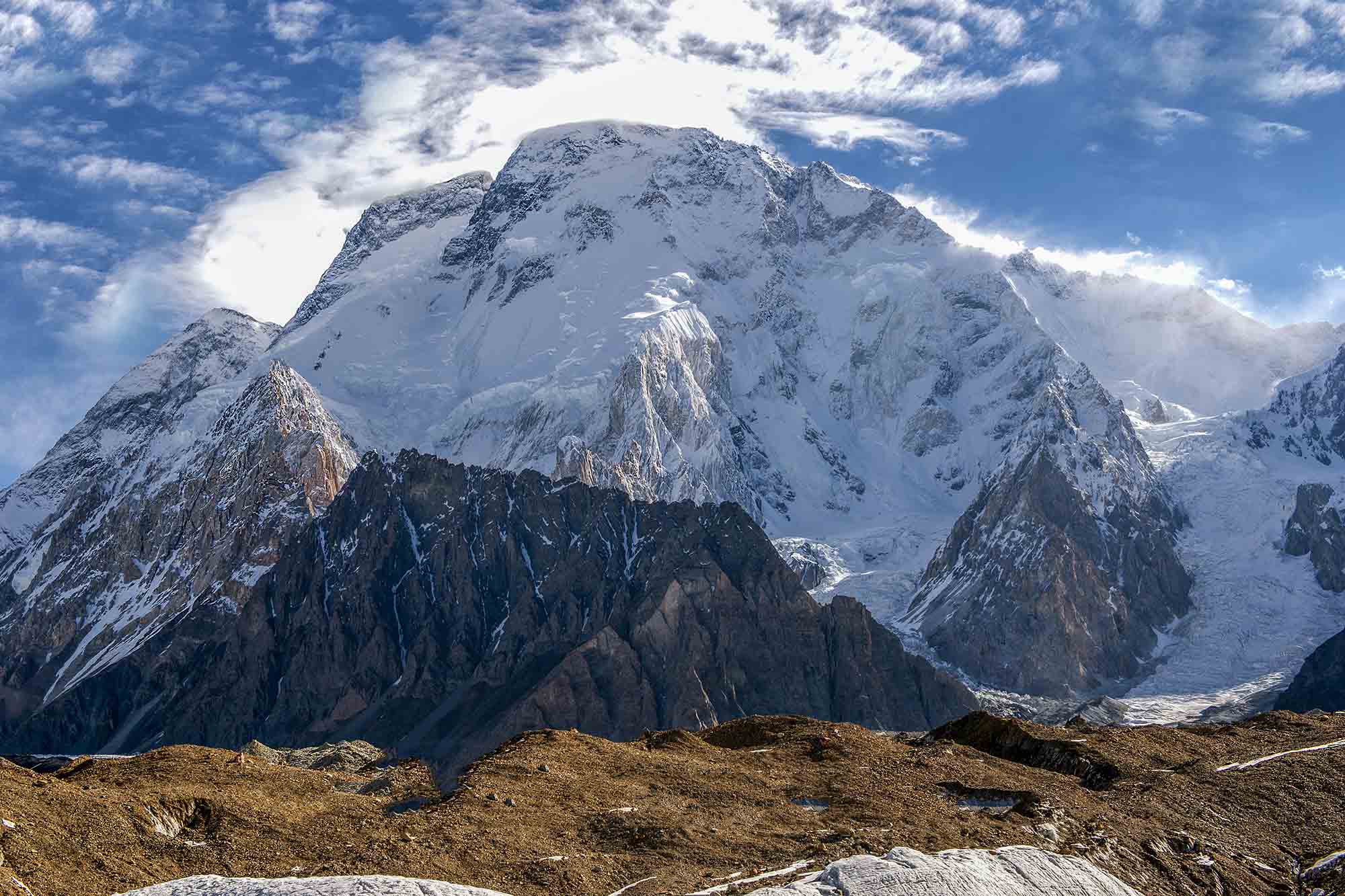
Broad Peak rises near the China-Pakistan border, about 8 km from K2, with shared approach routes via the Baltoro and Godwin-Austen glaciers to base camp around 4,850 m. Its name comes from a broad summit ridge spanning nearly 1.5 km that includes the main summit, a rocky foresummit (around 8,028 m), and Broad Peak Central (8,011 m). Climbers must traverse this exposed ridge after a long, exhausting day.
The mountain was first climbed in June 1957 by an Austrian team (Fritz Wintersteller, Marcus Schmuck, Kurt Diemberger, and Hermann Buhl) in alpine style without supplemental oxygen. The first winter ascent came in March 2013 by a Polish team, but two members died on the descent.
Avalanche Risk
Avalanches are among the greatest threats. Fresh snow, strong winds, and rapid temperature swings can destabilize slopes within hours. The section between Camp 2 and Camp 3 (roughly 6,000–7,000 m) is particularly prone to slab avalanches. Upper slopes and approaches near Camp 1 also see slides and rockfall, especially when snow is overloaded or when dry conditions expose unstable terrain.
In July 2026, an avalanche between Camp 2 and Camp 3 killed 10 climbers, including renowned mountaineer Nirmal “Nimsdai” Purja and several experienced Sherpa guides. Earlier incidents include avalanches in 2003, 2015, and other seasons that injured or killed climbers and porters. Climate-driven changes—warmer temperatures, altered snowfall, and glacier shifts—appear to be increasing instability and rockfall in the Karakoram.
The Death Zone and Physical Toll
Above 8,000 m, climbers enter the death zone, where oxygen levels are about one-third of those at sea level. The body cannot fully acclimatize. Decision-making slows, fatigue accelerates, and even simple tasks become exhausting. Summit days from the highest camp are long—often 12–18 hours round-trip—leaving little margin for error or deteriorating weather.
Most fatalities on 8,000ers occur on descent, when climbers are depleted. Hypoxia, frostbite, exhaustion, and falls compound one another. The long summit ridge amplifies these problems: whiteouts cause disorientation, cornices and exposure create fall hazards, and the false summit has historically tricked exhausted climbers into misjudging remaining effort or turning around too late.
Terrain Hazards and Technical Challenges
The normal route is less technical than K2’s, but it still features steep snow and ice slopes, heavily crevassed glaciers (especially the broken glacier approach from base camp), seracs, and rockfall zones. In hot, dry seasons, snow gives way to brittle ice and loose rock; climbers report microwave-sized rocks falling and poor crampon purchase on “sugar” snow over ice. Night climbing is often preferred to avoid daytime warming and rockfall.
Fixed ropes can introduce additional risk when poorly placed or worn. In some seasons, climbers have reported long runs between anchors and degraded lines, particularly on the summit ridge. A single failed anchor has previously led to fatal falls.
Weather, Remoteness, and Rescue Limitations
Karakoram weather is notoriously volatile: high winds (sometimes exceeding 100 km/h), sudden storms, whiteouts, and short weather windows. Winter attempts add extreme cold, limited daylight, and unstable snow. Helicopters struggle or cannot operate at the highest elevations, making self-rescue or teammate assistance the primary options in many emergencies. The shared base-camp area with K2 can create logistical congestion but also mutual aid during crises.
Broader Context and Changing Conditions
While Broad Peak’s fatality rate is lower than Annapurna’s or K2’s, it remains serious for any 8,000er. Commercial expeditions, improved forecasting, and better gear have increased success rates in good seasons, yet objective dangers persist. Dry, warm periods increase rockfall and alter snow stability; heavy snow followed by warming raises avalanche potential. Recent seasons have seen repeated reports of unstable terrain forcing teams to climb at night or abandon attempts.
Broad Peak rewards those who treat it with respect: thorough acclimatization, conservative decision-making, careful route assessment, and readiness to turn around. Its relative accessibility compared with K2 has drawn more climbers, but the mountain does not forgive misjudgment, bad luck with weather or snowpack, or underestimation of the long, exposed final ridge. In the death zone of the Karakoram, experience and preparation reduce but never eliminate the danger.
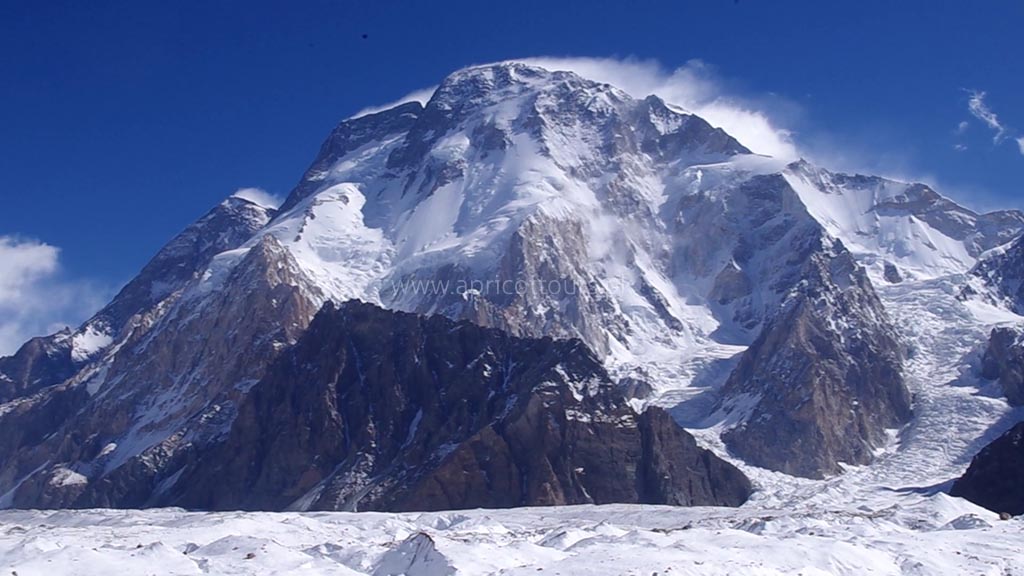
K2 is significantly more dangerous and technically demanding than Broad Peak, though both are serious 8,000-meter peaks in Pakistan’s Karakoram Range that share the same remote approach via the Baltoro Glacier and Concordia. They sit only about 8 km apart, yet their risk profiles differ sharply.
Quick Comparison
| Aspect | Broad Peak (8,051 m) | K2 (8,611 m) |
|---|---|---|
| World ranking | 12th highest | 2nd highest |
| Historical fatality rate | ~5% (deaths per successful summit) | Historically ~20–25%; modern cumulative closer to ~9.5–13% with commercialization |
| Technical difficulty | Serious but moderate (less steep overall) | Extremely technical (sustained steep rock/ice) |
| Signature hazard | Long exposed summit ridge + avalanches | The Bottleneck (hanging serac) |
| Weather exposure | High | Very high (more isolated, creates own systems) |
| Typical role | Often a “warm-up” or secondary target | Primary goal for elite climbers |
Sources consistently rate K2 as one of the hardest and deadliest of the 14 eight-thousanders (second only to Annapurna I by historical rate in many tallies). Broad Peak is considered one of the relatively more accessible 8,000ers—but “accessible” is only relative to K2.
Fatality Rates
- Broad Peak: Approximately 5% fatality rate. It has claimed dozens of lives (including the 2026 avalanche that killed 10 climbers between Camp 2 and Camp 3), but success rates are higher and absolute numbers lower than on K2.
- K2: Historically around 20–25% (roughly one death for every four summits in older data). Commercialization, fixed ropes, oxygen use, and better forecasting since the 2010s–2020s have lowered the cumulative ratio toward ~9.5–13% in some recent compilations (e.g., ~92 deaths and ~964 summits through 2025). Even so, the risk remains far higher than on Broad Peak or Everest. Most K2 deaths occur on descent.
Technical and Terrain Risks
K2 demands continuous technical climbing from relatively low on the mountain. The standard Abruzzi Spur includes House’s Chimney, the Black Pyramid, and—most notoriously—the Bottleneck at ~8,200–8,400 m. This narrow, 50–60° ice couloir sits directly under a massive hanging serac that can collapse without warning, sending ice avalanches down the only practical route. Climbers spend critical time in the death zone exposed to this objective hazard on both ascent and descent. Congestion, fixed-rope failure, and exhaustion amplify the danger (the 2008 disaster killed 11 in a single incident here). There are few safe resting places; the mountain is steep nearly the entire way.
Broad Peak is less steep and less technically continuous. The normal route involves snow slopes, crevassed glaciers, and some rockfall zones (especially in dry seasons), but it does not require the same sustained high-skill rock and ice climbing. The main challenges are a long, exhausting summit day and the broad ~1.5 km summit ridge with a false summit. Climbers can become disoriented in whiteouts or depleted while traversing the exposed ridge with limited protection. Avalanches (particularly between Camps 2 and 3) and rockfall remain serious objective dangers, as shown by the 2026 disaster and earlier incidents.
Shared and Differing Objective Hazards
Both peaks share:
- Death-zone physiology (hypoxia, poor decision-making, rapid fatigue).
- Unpredictable Karakoram weather (high winds, sudden storms, short windows).
- Avalanche and crevasse risk.
- Extreme remoteness and limited high-altitude rescue (helicopters rarely operate effectively above lower camps).
- Greater rockfall and unstable snow/ice in warmer, drier seasons linked to changing conditions.
K2’s isolation and steeper profile make its weather more severe and its objective hazards (especially the serac) less avoidable. Broad Peak’s risks are more concentrated in avalanche-prone slopes and the long ridge traverse.
Practical Implications for Climbers
Many expeditions use Broad Peak as preparation or a secondary objective before or alongside K2 attempts because it is logistically convenient and builds altitude experience with somewhat lower technical demands. Even elite climbers treat both with respect—Broad Peak has killed highly experienced mountaineers, and underestimating it has proven fatal. K2 remains in a different category: it requires prior 8,000 m experience, elite technical skills, and acceptance of a substantially higher statistical risk that cannot be fully mitigated.
In short, Broad Peak is a serious and potentially lethal mountain whose dangers (avalanches, ridge exposure, death zone) should never be understated. K2 is in a higher tier of both technical difficulty and overall lethality, defined especially by the unavoidable Bottleneck serac and sustained steep terrain.
On 30 July 2026, a large avalanche on Broad Peak (8,051 m) in Pakistan’s Karakoram Range killed all 10 members of an international climbing team. The incident occurred on the normal west ridge route between Camp 2 and Camp 3 at approximately 6,600 m (about 21,700 ft).
What Happened
Around 9:20–9:30 a.m. local time, the climbers—who were moving upward toward higher camps as part of a summit push—were struck by the avalanche on a steep, avalanche-prone slope. Satellite GPS trackers recorded rapid falls of several hundred meters; some climbers were carried nearly to Base Camp. Nirmal Purja’s tracker indicated a fall of about 800 m.
The group had reached Camp 2 the previous day. Their plan was to continue to Camp 3 on 30 July and push for the summit the following day. Prior conditions included a major wind storm earlier in the season and reports of elevated humidity and fresh snow, which contributed to unstable snowpack.
The Victims
All 10 climbers died. They were:
- Nirmal Purja (“Nimsdai”) – British-Nepali mountaineer, former Gurkha and UK Special Forces member, famous for climbing all 14 eight-thousanders in a record 189 days in 2019 (chronicled in the Netflix documentary 14 Peaks). He was leading the expedition through his company Elite Exped and pursuing further milestones, including multiple ascents of the 8,000ers (some without supplemental oxygen).
- Pur Bahadur Gurung (“Yukta”) – Nepali IFMGA-certified guide working with Elite Exped.
- Nima Sherpa, Kili Pemba Sherpa (“Kilu”), Nawang Thindu Sherpa, and Gyalu Sherpa – Experienced Nepali high-altitude guides/Sherpas.
- Sohail Sakhi – Pakistani guide/climber from Hunza (associated with Moving Mountains).
- Nadhira Al Harthy – Omani climber, the first Omani woman to summit Everest.
- Mallory Geis (also reported as Sarah Mallory Geis) – American climber.
- Wang Zhong – Chinese climber.
Six of the victims were Nepali, highlighting a heavy loss of experienced high-altitude expertise from Nepal’s mountaineering community.
Search, Rescue, and Recovery
Contact was lost after the avalanche. Notification to the Alpine Club of Pakistan and formal rescue efforts were delayed by many hours (reports indicate 12+ hours before authorities were fully informed and longer before operations fully launched). Helicopters and ground teams began searching on 31 July. Neighboring teams on K2 aborted their own summit pushes to assist.
Bodies were progressively located and recovered over the following days under difficult weather and terrain conditions. By early August, most had been recovered (some at lower elevations opposite Base Camp, others higher up), though a few remained challenging to retrieve due to ongoing hazards. On 1 August 2026, Elite Exped and authorities confirmed there were no survivors.
Context and Significance
The slope between Camps 2 and 3 on Broad Peak is a known avalanche-prone section. The disaster is one of the deadliest single incidents on the mountain and a major loss for the global climbing community, particularly given the experience level of many involved (especially Purja and the Nepali guides). It also renewed discussions about objective hazards on Karakoram peaks, delayed emergency response in remote high-altitude settings, and changing snow stability linked to weather patterns.
Recovery operations continued in the days after the confirmation of deaths, with bodies being brought down for repatriation amid ongoing risk on the mountain.
Nirmal Purja (known as Nims or Nimsdai), 25 July 1983 – 30 July 2026, was a Nepalese-British mountaineer widely regarded as one of the most accomplished and influential high-altitude climbers of his generation. He combined elite military training with extraordinary physical endurance and logistical skill to shatter multiple records on the world’s highest peaks.
Early Life and Military Career
Born in Dana village in Nepal’s Myagdi District (near Dhaulagiri), Purja grew up in a Gurkha family. Limited local opportunities led the family to move to Chitwan for better education. Following his father and older brothers, he joined the British Army’s Brigade of Gurkhas in 2003 at age 18.
In 2009 he became the first Gurkha to pass selection for the United Kingdom’s Special Boat Service (SBS), one of the world’s most demanding special forces units (part of the Royal Navy’s special forces). He served a total of 16 years in the military, including cold-weather warfare training that later informed his approach to extreme environments. He left the army around 2018–2019, remortgaging his house to fund full-time mountaineering.
Early Mountaineering
Purja’s first eight-thousander was Dhaulagiri in 2014. He summited Everest in 2016 and, in 2017, led a Gurkha team of 13 to the summit to mark 200 years of Gurkha service in the British Army. In 2018 he was appointed Member of the Order of the British Empire (MBE) by Queen Elizabeth II for outstanding achievements in extreme high-altitude mountaineering.
Project Possible (2019) – The Defining Achievement
In 2019 Purja launched “Project Possible,” aiming to climb all 14 eight-thousanders (peaks above 8,000 m) in under seven months. The previous record stood at nearly eight years (Kim Chang-ho). Using supplemental oxygen and a highly efficient support team (including Sherpas such as Mingma David Sherpa), he completed the feat in 6 months and 6 days (189 days), finishing on Shishapangma on 29 October 2019.
Notable highlights included:
- Summiting Everest, Lhotse, and Makalu within roughly 48 hours (a record he had previously set and then improved).
- Climbing five of the highest peaks in rapid succession.
- Completing the final five Karakoram peaks (including K2 and Broad Peak) in just 12 days.
The project was documented in the 2021 Netflix film 14 Peaks: Nothing Is Impossible, which brought him global fame. His oxygen-assisted speed record was later broken by Kristin Harila in 2023.
First Winter Ascent of K2 (2021)
In January 2021, Purja was part of a 10-member all-Nepali team that achieved the first winter ascent of K2 (8,611 m), the second-highest and one of the most dangerous mountains in the world. This was considered one of the last great unclaimed prizes in mountaineering.
Without Supplemental Oxygen and Later Records
Purja later pursued oxygen-free ascents. In 2024 he completed all 14 eight-thousanders without supplemental oxygen in about 2 years and 5 months, becoming the first person to do so both with and without bottled oxygen. He also completed the Seven Summits (highest peaks on each continent) in both styles.
By mid-2025 he had reached 50 successful 8,000 m summits (including 22 without oxygen) after climbing Nanga Parbat, setting records for the most such ascents overall and without oxygen. In 2025–2026 he was working on a “Hat-Trick” challenge aimed at completing the 14 peaks and Seven Summits three times each. At the time of his death he was on Broad Peak as part of efforts toward climbing all 14 peaks a second (or further) time without oxygen.
Other Contributions and Legacy
Purja founded Elite Exped (his guiding company), the Nimsdai Foundation (supporting mountain and porter communities), and an apparel line. He advocated for greater recognition of Sherpa and Nepali climbers, mountain cleanup efforts, and sustainability. He received an honorary degree from Loughborough University and other honors. His memoir Beyond Possible and the Netflix documentary further amplified his influence.
Purja died at age 43 in the 30 July 2026 avalanche on Broad Peak along with nine other climbers. His career transformed perceptions of what is possible in high-altitude mountaineering through speed, logistics, leadership, and repeated pushes into the death zone—while also highlighting both the human capacity for extreme achievement and the inherent risks of the mountains.
Some heroes don’t play in stadiums—they conquer the world’s highest mountains. Nirmal Purja proved that courage, discipline, and determination can make the impossible possible. Saddened by the tragic loss of Nims Dai and his fellow mountaineers on Broad Peak. May their courage… pic.twitter.com/hPSZ4dyVdF
— Shahid Afridi (@SAfridiOfficial) August 2, 2026
His loss leaves a silence far beyond the mountains. My heartfelt condolences go to his family, friends, and every family mourning a loved one lost on Broad Peak. May they all rest in eternal peace. ཨོཾ་མ་ཎི་པདྨེ་ཧཱུྃ!🙏 pic.twitter.com/5t8WUPcGZk
— Poornima Shrestha (@poornimashresth) August 2, 2026
A sign of intelligence is the ability to disagree with yourself.
— Adam Grant (@AdamMGrant) August 3, 2026
One of my favourite photos from the Vikram-1 journey.
— Pawan (@PawanKChandana) August 3, 2026
A few days before launch, little Drushil—son of one of our team members—proudly wore his dad’s mission T-shirt.
Nothing is more heartwarming than seeing Gen Alpha grow up dreaming about space.
And today, he turns 2. Happy… pic.twitter.com/T6O7pngPFk

