Most of the energy needs of rural India can be fulfilled from within !
— Ruchit G Garg (@ruchitgarg) April 14, 2026
Leave No Farmer Behind #HFN pic.twitter.com/5QM2PLRzoc
How?
— Paramendra Kumar Bhagat (@paramendra) April 15, 2026
How to massively scale this?
— Paramendra Kumar Bhagat (@paramendra) April 15, 2026
Modi Ji ko patra likhiye. 😅
— Ruchit G Garg (@ruchitgarg) April 15, 2026
Aaj kal patr nahin likhte. Aaj kal tweet karte hain. :)
— Paramendra Kumar Bhagat (@paramendra) April 15, 2026


This should also work for human waste. No?
— Paramendra Kumar Bhagat (@paramendra) April 15, 2026
Would solve the urban sewage problem. And keep the rivers clean.
Yes
— Ruchit G Garg (@ruchitgarg) April 15, 2026
The HFN Biogas Cube (from the thread by Ruchit Garg of Harvesting Farmer Network / HFN) is a modern, modular, plug-and-play small-scale biogas digester designed specifically for smallholder farmers with just 2–3 cattle. The thread highlights how most of rural India's energy needs (especially cooking) can be met locally using cow dung, solving longstanding issues with traditional biogas systems that were unreliable, expensive to build, and required more animals/feedstock. It includes photos of the compact "cube" unit (a white IBC-style plastic tank in a metal cage with inlet/outlet valves), a traditional larger digester for context, and cattle in sheds to show the feedstock source. Replies discuss scaling it massively, applying it to human waste in urban areas, and cooperative models like Amul. How the HFN Biogas Cube (and Biogas in General) WorksBiogas production relies on anaerobic digestion—a natural process where bacteria break down organic matter in an oxygen-free environment to produce methane-rich gas (typically 55–70% CH₄, the rest mostly CO₂) plus a nutrient-rich slurry byproduct.
For the HFN Cube specifically (a compact, affordable, modular unit installable in ~2 days):
Why the Amul model is the best fit (and why finance "works beautifully" as you noted):
Overall feasibility: Enormous. India's biogas potential is 18–270 billion m³/year (mostly untapped); small-scale alone could transform rural energy security, cut emissions, and boost farmer incomes like Amul did for dairy. Policy push (expand SATAT/GOBARdhan with cooperative mandates) + private innovation (HFN cubes) + Amul-style ownership = self-reinforcing rural economy. Risks: maintenance culture and uneven adoption in low-cattle areas—but incentives + training mitigate this.Urban India: Human Waste/Sewage to Biogas + Fertilizer (Same Amul Logic)India's cities dump massive sewage into rivers (Ganga, Yamuna pollution crisis). Treat it as a resource instead.
How it works (same anaerobic digestion):
Big picture: This is circular economy at national scale—rural dung + urban sewage powering India, fertilizing fields, cleaning air/water, and empowering citizens via ownership (Amul-style). Large plants maximize efficiency where waste concentrates; small modular ones (like HFN Cube) ensure inclusion everywhere. With political will, cooperatives, and innovators like HFN, it could be a game-changer for energy security, farmer livelihoods, climate goals, and Swachh Bharat. The thread's simple idea has huge extrapolation power—start with cubes and coops, scale to national impact.
For the HFN Cube specifically (a compact, affordable, modular unit installable in ~2 days):
- Feedstock: Daily cow dung (from 2–3 cattle) is mixed with water to form a slurry (roughly equal parts by volume/weight). This is fed into the sealed plastic "cube" digester (essentially an adapted 1,000-liter IBC tank with valves and gas outlet).
- Digestion: Inside the airtight tank, anaerobic microbes (naturally present in dung, sometimes boosted with specialized inoculants from microbiologists as HFN mentions) ferment the organic matter over days/weeks. The process is temperature-sensitive (optimal ~25–35°C, common in rural India) and produces biogas that rises to the top.
- Outputs:
- Biogas: Piped directly to a kitchen stove for ~2–3 hours of free cooking gas per day (enough for 50%+ of a family's needs, replacing LPG cylinders). It's clean, smokeless, and odor-controlled in modern designs.
- Digested slurry (effluent): Drained from the bottom tap as a free, liquid organic fertilizer (high in NPK nutrients, low in pathogens after digestion). It replaces costly chemical fertilizers like DAP/urea and improves soil health.
- Key innovations over old systems: Traditional Indian plants (floating-dome KVIC or fixed-dome Janata models) were masonry-built, needed 5+ cattle minimum, were prone to leaks/cracks, costly to install/maintain, and unreliable for small farmers. The HFN Cube is modular/scalable (add more units if needed), portable, low-maintenance, quick to deploy, and works with minimal dung. Future versions may include smart sensors for alerts in local languages.
Why the Amul model is the best fit (and why finance "works beautifully" as you noted):
- Amul's three-tier cooperative structure (village societies → district unions → state federation) turned fragmented dairy farmers into owners of a ₹1 lakh crore+ empire. Farmers deliver milk daily, get paid instantly, own shares, and benefit from professional processing/marketing while retaining control. Profits flow back via bonuses/dividends.
- Apply identically to biogas:
- Village-level biogas cooperatives: Farmers contribute dung (or run their own HFN Cube). The coop aggregates excess slurry/gas, maintains units (trained local technicians), installs new cubes at scale (bulk discounts + subsidies), and markets organic fertilizer nationally (branded like Amul milk).
- You profit when you participate: Daily "dividends" come as free/reduced cooking gas (piped or bottled), cheap fertilizer for your fields, and cash from selling excess slurry or carbon credits. Initial cube cost could be financed via coop loans/shares (repayable from LPG savings in 2–4 years). Govt subsidies (existing under biogas programs or GOBARdhan) + private tech like HFN lower barriers.
- Aggregation power: Coops enable community-scale upgrades (multiple cubes or shared larger digesters) for surplus CBG (compressed biogas) production, sold as vehicle fuel or to grids—generating extra revenue.
- Massive scaling potential: One coop per village could cover cooking for thousands of households. With India's rural energy needs largely met locally (as the thread says), this slashes LPG imports, reduces firewood use (deforestation + indoor pollution, mainly affecting women), cuts chemical fertilizer imports, and creates rural jobs (installation, maintenance, fertilizer processing). Pilot via existing dairy coops (many already experiment with dung-based biogas).
Overall feasibility: Enormous. India's biogas potential is 18–270 billion m³/year (mostly untapped); small-scale alone could transform rural energy security, cut emissions, and boost farmer incomes like Amul did for dairy. Policy push (expand SATAT/GOBARdhan with cooperative mandates) + private innovation (HFN cubes) + Amul-style ownership = self-reinforcing rural economy. Risks: maintenance culture and uneven adoption in low-cattle areas—but incentives + training mitigate this.Urban India: Human Waste/Sewage to Biogas + Fertilizer (Same Amul Logic)India's cities dump massive sewage into rivers (Ganga, Yamuna pollution crisis). Treat it as a resource instead.
How it works (same anaerobic digestion):
- Sewage/sludge (human waste + organics) fed into large anaerobic digesters at sewage treatment plants (STPs) or community toilets.
- Produces biogas (for electricity/CBG/cooking) + digestate (organic fertilizer after processing).
- Proven: Sulabh International and others have run night-soil-fed plants; modern STPs can capture flared gas for power. Yields are good—human feces alone can produce ~0.4 m³ biogas/kg.
- Urban waste cooperatives or PPPs: Municipalities + resident groups form entities owning shares in upgraded STPs. Revenue from biogas sales (to grids/vehicles), fertilizer (sold to farms), and tipping fees/carbon credits is shared—perhaps as lower sewage taxes, community funds, or direct payouts.
- Households/businesses "participate" by proper waste segregation/connection to sewers; benefit via cheaper energy/fertilizer markets or green credits.
- Scale via large plants (far more efficient here due to concentrated waste): Economies in tech, purification, and distribution. Convert sewage to CBG for city buses/fleets + organic manure (replacing chemicals, closing nutrient loop). Avoid river pollution entirely.
Big picture: This is circular economy at national scale—rural dung + urban sewage powering India, fertilizing fields, cleaning air/water, and empowering citizens via ownership (Amul-style). Large plants maximize efficiency where waste concentrates; small modular ones (like HFN Cube) ensure inclusion everywhere. With political will, cooperatives, and innovators like HFN, it could be a game-changer for energy security, farmer livelihoods, climate goals, and Swachh Bharat. The thread's simple idea has huge extrapolation power—start with cubes and coops, scale to national impact.
From Waste to Wealth: Scaling Modular Biogas and Cooperative Models to Power the Global South
In rural India, a simple white plastic “cube” the size of a large water tank is quietly rewriting energy access. Developed by the Harvesting Farmer Network (HFN), this modular biogas digester turns dung from just 2–3 cattle into enough clean cooking gas for a family—plus free organic fertilizer. It installs in two days, costs far less than traditional plants, and avoids the leaks and maintenance nightmares of older systems. One thread on X captured farmers installing it, smiling as they pipe gas straight to their kitchens. This isn’t just an Indian story. Across the Global South—Sub-Saharan Africa, Latin America, Southeast Asia—billions of people still cook over open fires or buy expensive LPG, while livestock waste rots and emits methane, and cities drown rivers in untreated sewage. The same technology, scaled through farmer-owned cooperatives like India’s legendary Amul model, could deliver clean energy, healthier soils, and new rural incomes on a continental scale. How Biogas Works: Simple, Decentralized, and CircularBiogas is produced through anaerobic digestion: bacteria break down organic matter (cow dung, crop waste, or human sewage) in an oxygen-free tank, releasing a methane-rich gas (55–70% CH₄) that burns cleanly like natural gas. The leftover slurry is a nutrient-packed liquid fertilizer.
The HFN Cube exemplifies the new generation of small-scale digesters: daily dung slurry is fed in, gas collects at the top for stove use, and effluent drains out the bottom. No electricity required for basic operation. It works in tropical climates, needs minimal animals, and produces 2–3 hours of cooking gas daily—enough to replace half a household’s LPG needs. Traditional fixed-dome plants required 5+ cattle and frequent repairs; modular cubes are portable, leak-proof, and scalable. Larger plants simply add more units or go community-scale for surplus compressed biogas (CBG) sold as vehicle fuel or grid power.
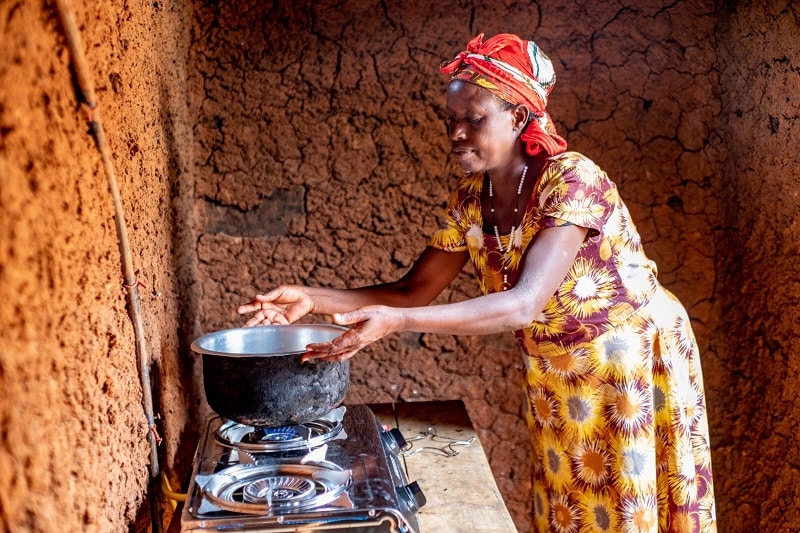
A woman in Rwanda cooks on a biogas stove (left); an Indian household uses biogas for daily meals (right). Clean, smokeless flame replaces firewood or charcoal.India’s Blueprint: Rural Dung + Amul Cooperatives + Urban SewageIndia already leads with millions of household digesters and is accelerating via programs like SATAT and GOBARdhan. HFN-style cubes make it viable for the smallest farms (most of India’s 120+ million smallholders). The real multiplier is the Amul cooperative model: three-tier village-district-state structure where farmers own the system, deliver daily inputs, and share profits. In biogas terms, village coops aggregate excess slurry, maintain units, bulk-buy cubes with subsidies, and market branded organic fertilizer. Farmers get free gas, cheap fertilizer, and cash dividends from CBG sales or carbon credits—payback in 2–4 years via LPG savings.
Large plants add efficiency for clusters, but the hybrid (household cubes + coop-scale) ensures inclusion. Urban India flips the script: sewage treatment plants capture biogas from human waste instead of dumping it into rivers. The same anaerobic process yields gas for power or CBG plus safe digestate fertilizer. Pilots already exist; scaling via public-private partnerships (PPPs) turns a pollution crisis into revenue.
Amul’s finance magic—immediate payments, shared ownership, professional management—works perfectly here. Farmers “profit when they participate.”

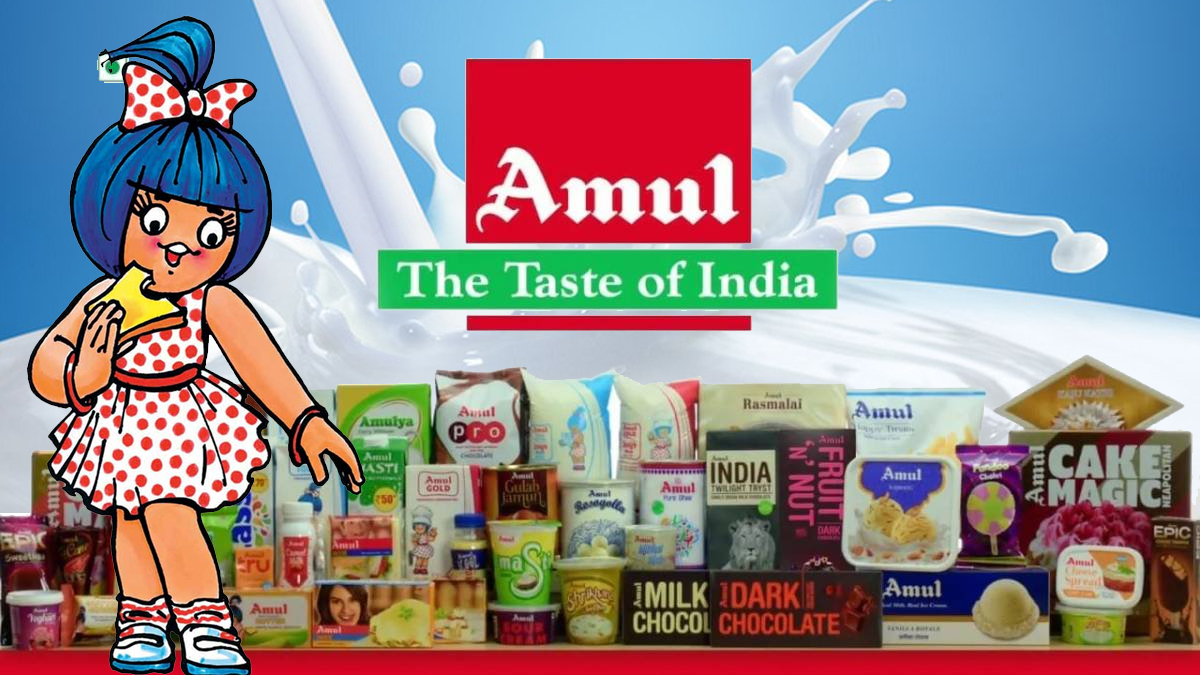
Amul’s cooperative success: farmers, cattle, and the iconic brand that turned small dairy into a global empire. The same ownership model can power biogas.Global South Potential: Enormous, Untapped, and UrgentThe International Energy Agency estimates today’s sustainable biogas potential at nearly 1,000 billion cubic meters of natural-gas equivalent—equivalent to a quarter of global gas demand. 80% lies in emerging and developing economies, led by Brazil, China, and India. Livestock manure alone (cattle, buffalo, pigs, poultry) could yield 2,600–3,800 TWh of energy globally, meeting electricity needs for 330–490 million people and cutting 930–1,260 Mt CO₂-equivalent emissions yearly (13–18% of livestock-related GHGs). In the Global South, where 2.1 billion people still rely on polluting fuels for cooking, biogas directly tackles health crises (815,000 premature deaths yearly from household air pollution, mostly in Africa and Asia) and deforestation.
Sub-Saharan Africa has vast cattle herds and growing urban waste; Latin America’s agricultural residues (sugarcane, livestock) are ideal; Southeast Asia’s rice paddies and pigs offer co-digestion opportunities. Yet adoption lags: only ~5% of global potential is used, with Europe capturing far more of its share than the South.
Rural scaling: Modular digesters like HFN’s (or local equivalents) + Amul-style coops. Nepal’s Biogas Support Program (public-private partnership) installed hundreds of thousands of plants with quality control, training, and microfinance—proving it scales. Ethiopia and Uganda have community coops pooling dung for shared plants serving cooking and agro-processing. Brazil’s Agro-Energy Cooperatives in Paraná use manure biogas for grain drying, delivering direct savings to small farms. Coops reduce risk, enable bulk procurement, professional maintenance, and surplus sales—exactly Amul’s playbook.
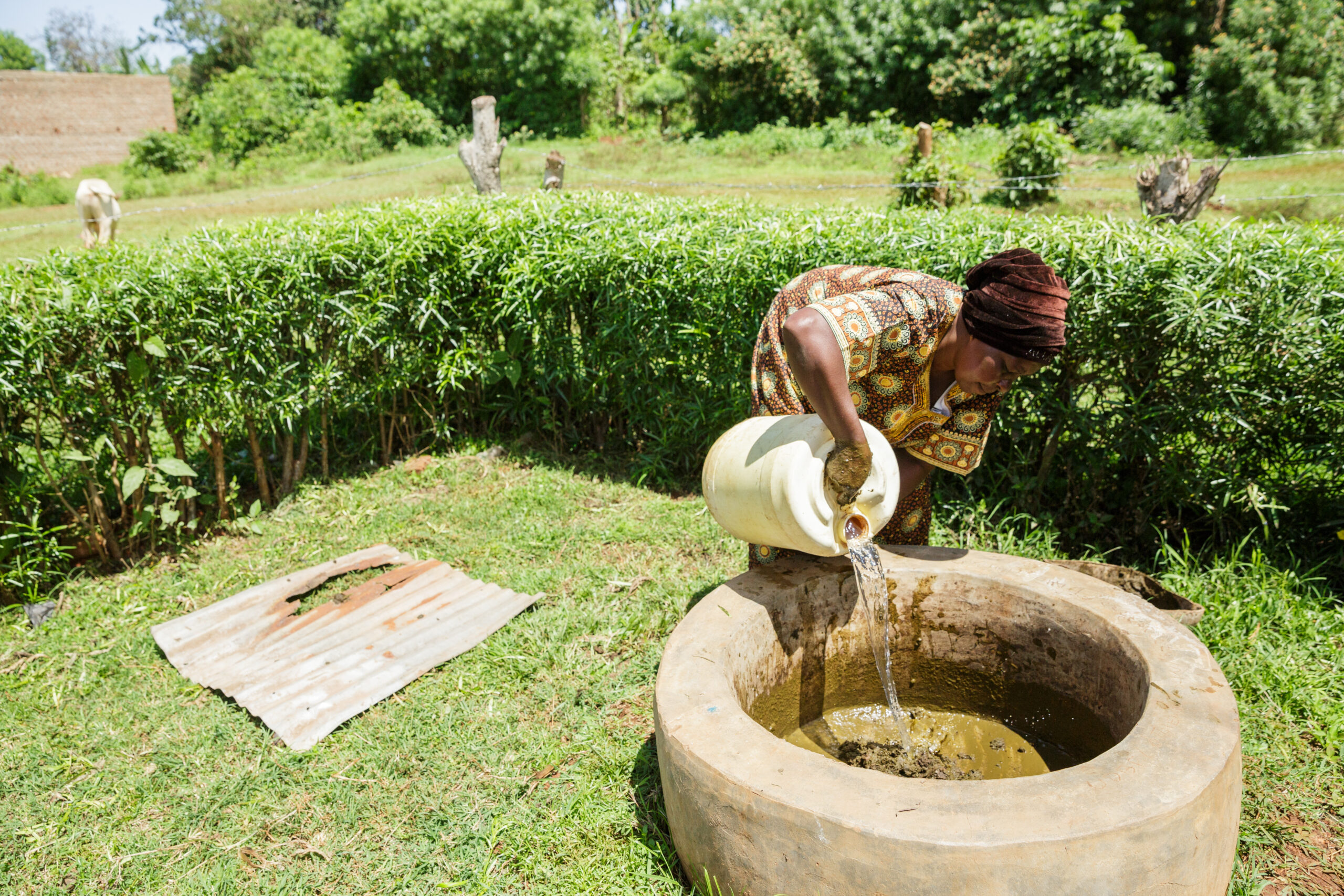
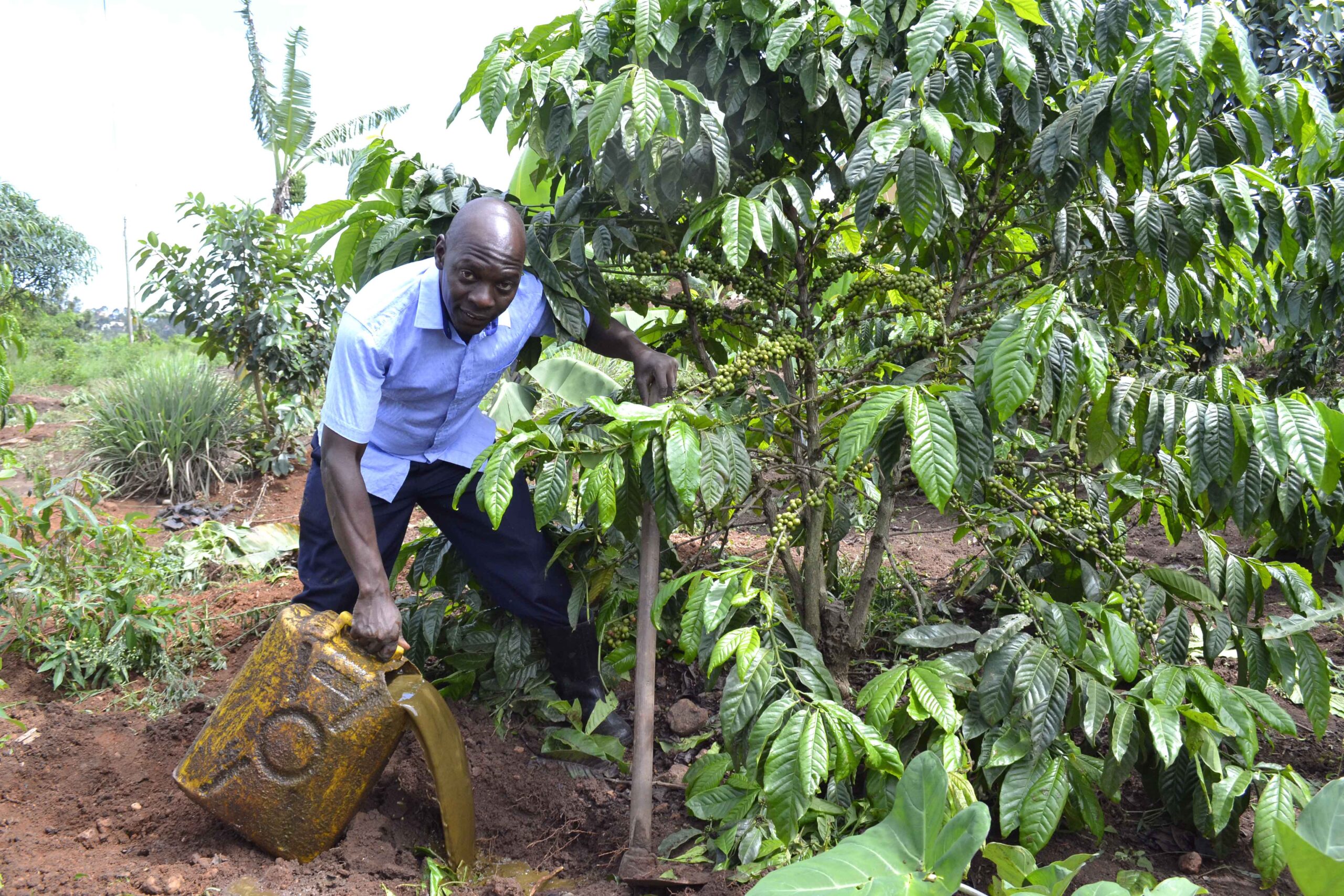
East African smallholders feed bio-digesters (top) and apply nutrient-rich slurry to coffee plants (bottom)—turning waste into resilience.
Urban scaling: Cities in the Global South generate massive sewage; 62% is currently unsafely managed. Anaerobic digesters at treatment plants or community toilets turn it into biogas (for electricity/CBG) and pathogen-reduced fertilizer. South Africa’s Johannesburg plants already generate power from sewage; Zambia pilots briquettes from treated sludge; Mozambique and others experiment with sanitation-business models. Large centralized plants are most efficient here, but PPPs or urban waste coops (households “participate” via proper sewer connections and share revenue via lower fees or green credits) mirror Amul’s incentive structure.

Diagram of a latrine-linked biogas system: human waste feeds the digester, producing gas and safe bio-slurry—perfect for dense urban Global South settings.Challenges and the Winning FormulaUpfront costs, maintenance culture, water access, and awareness remain barriers. Solutions exist: subsidies + cooperative/microfinance loans (repayable from savings), local technician training, and policy mandates (expand India’s SATAT-style schemes continent-wide). Hybrid models—decentralized cubes for remote farms, larger plants for clusters—balance inclusion and efficiency. Co-benefits (carbon credits, nutrient recovery, jobs in installation/fertilizer processing) make projects bankable.A Circular Revolution Is PossibleImagine: Rural Africa and Latin America’s cattle dung powering millions of clean stoves and fertilizing depleted soils. Asian and African cities capturing sewage methane instead of polluting rivers. Farmer-owned cooperatives ensuring profits stay local, just as Amul lifted millions out of poverty through dairy. With political will, smart finance, and innovators exporting HFN-style tech, biogas can slash energy poverty, cut emissions, improve health, and build resilient rural economies across the Global South.
The technology is proven. The model—cooperative, participatory, profitable—works. The waste is already there. The question is no longer “if,” but how fast we scale it. The Global South doesn’t need to import energy solutions. It can grow its own—literally—from the ground up.
In rural India, a simple white plastic “cube” the size of a large water tank is quietly rewriting energy access. Developed by the Harvesting Farmer Network (HFN), this modular biogas digester turns dung from just 2–3 cattle into enough clean cooking gas for a family—plus free organic fertilizer. It installs in two days, costs far less than traditional plants, and avoids the leaks and maintenance nightmares of older systems. One thread on X captured farmers installing it, smiling as they pipe gas straight to their kitchens. This isn’t just an Indian story. Across the Global South—Sub-Saharan Africa, Latin America, Southeast Asia—billions of people still cook over open fires or buy expensive LPG, while livestock waste rots and emits methane, and cities drown rivers in untreated sewage. The same technology, scaled through farmer-owned cooperatives like India’s legendary Amul model, could deliver clean energy, healthier soils, and new rural incomes on a continental scale. How Biogas Works: Simple, Decentralized, and CircularBiogas is produced through anaerobic digestion: bacteria break down organic matter (cow dung, crop waste, or human sewage) in an oxygen-free tank, releasing a methane-rich gas (55–70% CH₄) that burns cleanly like natural gas. The leftover slurry is a nutrient-packed liquid fertilizer.
The HFN Cube exemplifies the new generation of small-scale digesters: daily dung slurry is fed in, gas collects at the top for stove use, and effluent drains out the bottom. No electricity required for basic operation. It works in tropical climates, needs minimal animals, and produces 2–3 hours of cooking gas daily—enough to replace half a household’s LPG needs. Traditional fixed-dome plants required 5+ cattle and frequent repairs; modular cubes are portable, leak-proof, and scalable. Larger plants simply add more units or go community-scale for surplus compressed biogas (CBG) sold as vehicle fuel or grid power.
A woman in Rwanda cooks on a biogas stove (left); an Indian household uses biogas for daily meals (right). Clean, smokeless flame replaces firewood or charcoal.India’s Blueprint: Rural Dung + Amul Cooperatives + Urban SewageIndia already leads with millions of household digesters and is accelerating via programs like SATAT and GOBARdhan. HFN-style cubes make it viable for the smallest farms (most of India’s 120+ million smallholders). The real multiplier is the Amul cooperative model: three-tier village-district-state structure where farmers own the system, deliver daily inputs, and share profits. In biogas terms, village coops aggregate excess slurry, maintain units, bulk-buy cubes with subsidies, and market branded organic fertilizer. Farmers get free gas, cheap fertilizer, and cash dividends from CBG sales or carbon credits—payback in 2–4 years via LPG savings.
Large plants add efficiency for clusters, but the hybrid (household cubes + coop-scale) ensures inclusion. Urban India flips the script: sewage treatment plants capture biogas from human waste instead of dumping it into rivers. The same anaerobic process yields gas for power or CBG plus safe digestate fertilizer. Pilots already exist; scaling via public-private partnerships (PPPs) turns a pollution crisis into revenue.
Amul’s finance magic—immediate payments, shared ownership, professional management—works perfectly here. Farmers “profit when they participate.”
Amul’s cooperative success: farmers, cattle, and the iconic brand that turned small dairy into a global empire. The same ownership model can power biogas.Global South Potential: Enormous, Untapped, and UrgentThe International Energy Agency estimates today’s sustainable biogas potential at nearly 1,000 billion cubic meters of natural-gas equivalent—equivalent to a quarter of global gas demand. 80% lies in emerging and developing economies, led by Brazil, China, and India. Livestock manure alone (cattle, buffalo, pigs, poultry) could yield 2,600–3,800 TWh of energy globally, meeting electricity needs for 330–490 million people and cutting 930–1,260 Mt CO₂-equivalent emissions yearly (13–18% of livestock-related GHGs). In the Global South, where 2.1 billion people still rely on polluting fuels for cooking, biogas directly tackles health crises (815,000 premature deaths yearly from household air pollution, mostly in Africa and Asia) and deforestation.
Sub-Saharan Africa has vast cattle herds and growing urban waste; Latin America’s agricultural residues (sugarcane, livestock) are ideal; Southeast Asia’s rice paddies and pigs offer co-digestion opportunities. Yet adoption lags: only ~5% of global potential is used, with Europe capturing far more of its share than the South.
Rural scaling: Modular digesters like HFN’s (or local equivalents) + Amul-style coops. Nepal’s Biogas Support Program (public-private partnership) installed hundreds of thousands of plants with quality control, training, and microfinance—proving it scales. Ethiopia and Uganda have community coops pooling dung for shared plants serving cooking and agro-processing. Brazil’s Agro-Energy Cooperatives in Paraná use manure biogas for grain drying, delivering direct savings to small farms. Coops reduce risk, enable bulk procurement, professional maintenance, and surplus sales—exactly Amul’s playbook.
East African smallholders feed bio-digesters (top) and apply nutrient-rich slurry to coffee plants (bottom)—turning waste into resilience.
Urban scaling: Cities in the Global South generate massive sewage; 62% is currently unsafely managed. Anaerobic digesters at treatment plants or community toilets turn it into biogas (for electricity/CBG) and pathogen-reduced fertilizer. South Africa’s Johannesburg plants already generate power from sewage; Zambia pilots briquettes from treated sludge; Mozambique and others experiment with sanitation-business models. Large centralized plants are most efficient here, but PPPs or urban waste coops (households “participate” via proper sewer connections and share revenue via lower fees or green credits) mirror Amul’s incentive structure.
Diagram of a latrine-linked biogas system: human waste feeds the digester, producing gas and safe bio-slurry—perfect for dense urban Global South settings.Challenges and the Winning FormulaUpfront costs, maintenance culture, water access, and awareness remain barriers. Solutions exist: subsidies + cooperative/microfinance loans (repayable from savings), local technician training, and policy mandates (expand India’s SATAT-style schemes continent-wide). Hybrid models—decentralized cubes for remote farms, larger plants for clusters—balance inclusion and efficiency. Co-benefits (carbon credits, nutrient recovery, jobs in installation/fertilizer processing) make projects bankable.A Circular Revolution Is PossibleImagine: Rural Africa and Latin America’s cattle dung powering millions of clean stoves and fertilizing depleted soils. Asian and African cities capturing sewage methane instead of polluting rivers. Farmer-owned cooperatives ensuring profits stay local, just as Amul lifted millions out of poverty through dairy. With political will, smart finance, and innovators exporting HFN-style tech, biogas can slash energy poverty, cut emissions, improve health, and build resilient rural economies across the Global South.
The technology is proven. The model—cooperative, participatory, profitable—works. The waste is already there. The question is no longer “if,” but how fast we scale it. The Global South doesn’t need to import energy solutions. It can grow its own—literally—from the ground up.
From Waste to Wealth: A Hybrid Corporate-Cooperative Franchise Model to Power the Global South and Restore Its Soils
In rural India, a compact white “biogas cube” from the Harvesting Farmer Network turns dung from just two or three cows into clean cooking gas and liquid organic fertilizer. It installs in days, works reliably, and has already sparked farmer excitement on social media. But this is no longer just an Indian innovation. Across the Global South—Sub-Saharan Africa, Latin America, Southeast Asia—vast livestock herds produce millions of tons of waste daily, while cities struggle with sewage and soils steadily lose their life-giving organic matter. The solution? Scale the same technology through a hybrid business model that blends the proven power of farmer-owned cooperatives (like India’s Amul) with the speed, capital, and expertise of traditional corporations or even multinationals. Think fast-food franchises meets motel empires: the corporation supplies the brand, technology, financing, and market access; local farmers, households, and cooperatives own and operate the plants, profiting directly from participation. This model doesn’t just generate energy—it reverses decades of soil degradation, an existential threat to food security and climate stability. The Core Technology: Simple, Circular, and Ready to ScaleBiogas is produced by anaerobic digestion: bacteria break down organic waste (cow dung, crop residues, or sewage) in oxygen-free tanks, yielding methane-rich gas for cooking, electricity, or vehicle fuel, plus a nutrient-rich digestate that serves as premium organic fertilizer. Modular units like the HFN Cube make it accessible to the smallest farms. Larger community or industrial plants add efficiency for surplus compressed biogas (CBG). The byproduct—digestate—directly addresses a silent crisis: global agricultural soils have lost enormous amounts of soil organic carbon (SOC) due to intensive farming, deforestation, and land-use change. In the tropics and subtropics, these losses are most severe, with annual global topsoil SOC declines estimated at around 1.9 Pg (petagrams) of carbon—equivalent to massive CO₂ emissions and reduced crop productivity. Digestate restores SOC, improves water retention, boosts yields, and cuts reliance on imported chemical fertilizers.

Biogas digestate—liquid and solid—applied as fertilizer on fields. It closes the nutrient loop, turning waste into higher-quality soil and healthier crops.India’s Proven Blueprint—and Its Natural Evolution into a Hybrid ModelIndia’s Amul cooperative transformed small dairy farmers into owners of a global brand by aggregating milk, professionalizing processing, and sharing profits. The same three-tier structure (village societies → district unions → state federation) can aggregate dung or sewage, maintain digesters, and market organic fertilizer or CBG. Farmers deliver waste (or run household cubes), receive immediate benefits—free gas, cheap fertilizer, cash from surplus sales—and own shares that pay dividends. Urban sewage plants follow suit via public-private partnerships, turning river pollution into revenue.
Yet pure cooperatives can be slow to scale without capital and technical know-how. Enter the hybrid franchise model: a corporation (Indian, multinational, or even Amul itself expanding abroad) acts as the “franchisor.” It provides:
Amul itself demonstrates the hybrid power: the world’s largest farmer-owned cooperative recently entered the US market by partnering with the Michigan Milk Producers Association (a 108-year-old US cooperative) and Costco. Amul provides branding, formulations, and marketing; the US partner handles local milk production and processing. Fresh Amul-branded milk is now on US shelves—proof that the cooperative spirit can team up with corporate distribution and scale across borders.
Apply this to biogas: an MNC or Indian corporate player rolls out standardized “Biogas Franchise” packages—cubes for households, medium plants for villages, large digesters for urban sewage. Local cooperatives or even individual farmers become owners/operators. The corporation handles R&D, quality control, and off-take agreements for CBG or fertilizer exports. Result? Rapid deployment, lower risk, and trust—farmers aren’t just customers; they’re equity-holding participants.

Patel-owned motels across America show how community-driven ownership, combined with scalable business models, can dominate entire sectors. The same hybrid logic accelerates biogas adoption.Why This Hybrid Scales Fast—and Why Soil Restoration Is ExistentialPure government or NGO programs move slowly. Pure corporate models risk extractive pricing. The hybrid solves both: corporations bring speed and capital; cooperatives ensure local ownership and buy-in. Pilots in East Africa (dairy biogas cooperatives) and Latin America already show cooperative biogas works; layering corporate franchising would turbocharge it.
The soil angle makes this urgent. Decades of chemical-heavy farming have stripped Global South soils of organic carbon, reducing fertility, worsening drought resilience, and contributing to climate feedback loops. Digestate from scaled biogas plants can reverse this: studies show organic amendments rebuild SOC, improve yields by 10–20% in depleted soils, and sequester carbon. With 500+ million smallholders at risk of falling productivity, restoring soil isn’t optional—it’s foundational to feeding a growing population without further deforestation.
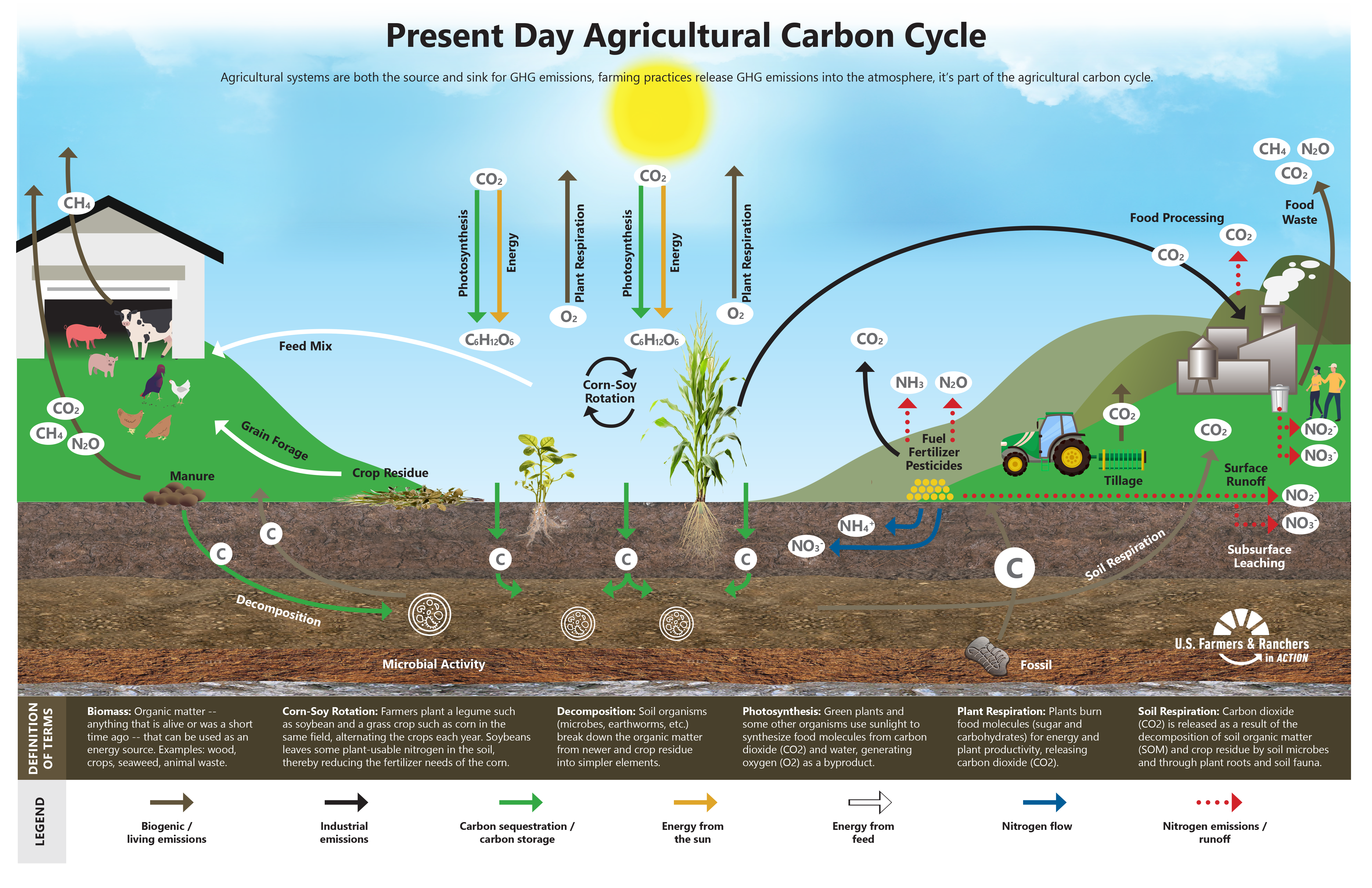
The agricultural carbon cycle. Declining soil organic carbon (visible in the depleted “C” pools below croplands) is reversed when biogas digestate returns organic matter to fields.Urban India and the Global South: Sewage as the Next FrontierIn cities, the same hybrid model upgrades sewage treatment plants. Corporations finance and operate large digesters; urban waste cooperatives or PPPs share revenues from biogas-powered electricity/CBG and pathogen-reduced fertilizer. Households “participate” via proper waste connections and reap lower utility bills or community dividends—mirroring the rural profit-when-you-participate ethos.The Path Forward: Policy, Pilots, and ProfitChallenges remain—initial costs, maintenance culture, water access—but the hybrid model mitigates them through corporate training, performance-based financing, and cooperative risk-sharing. Governments can catalyze with targeted subsidies, carbon-market access, and mandates for corporate-coop partnerships (expanding programs like India’s SATAT or GOBARdhan continent-wide).
The waste is already there. The technology works. The Amul model proves ownership creates loyalty and scale. Corporate franchising adds velocity. Together, they can turn the Global South’s waste streams into clean energy, restored soils, healthier rivers, and resilient rural economies—while delivering returns to investors and farmers alike.
This isn’t charity or top-down aid. It’s a self-reinforcing business revolution: corporations solve knowledge and finance; communities own the assets and the upside; soils heal; energy poverty ends. The Global South doesn’t need imported solutions. It can franchise its own future—from the dung pile to the dinner table and beyond.
In rural India, a compact white “biogas cube” from the Harvesting Farmer Network turns dung from just two or three cows into clean cooking gas and liquid organic fertilizer. It installs in days, works reliably, and has already sparked farmer excitement on social media. But this is no longer just an Indian innovation. Across the Global South—Sub-Saharan Africa, Latin America, Southeast Asia—vast livestock herds produce millions of tons of waste daily, while cities struggle with sewage and soils steadily lose their life-giving organic matter. The solution? Scale the same technology through a hybrid business model that blends the proven power of farmer-owned cooperatives (like India’s Amul) with the speed, capital, and expertise of traditional corporations or even multinationals. Think fast-food franchises meets motel empires: the corporation supplies the brand, technology, financing, and market access; local farmers, households, and cooperatives own and operate the plants, profiting directly from participation. This model doesn’t just generate energy—it reverses decades of soil degradation, an existential threat to food security and climate stability. The Core Technology: Simple, Circular, and Ready to ScaleBiogas is produced by anaerobic digestion: bacteria break down organic waste (cow dung, crop residues, or sewage) in oxygen-free tanks, yielding methane-rich gas for cooking, electricity, or vehicle fuel, plus a nutrient-rich digestate that serves as premium organic fertilizer. Modular units like the HFN Cube make it accessible to the smallest farms. Larger community or industrial plants add efficiency for surplus compressed biogas (CBG). The byproduct—digestate—directly addresses a silent crisis: global agricultural soils have lost enormous amounts of soil organic carbon (SOC) due to intensive farming, deforestation, and land-use change. In the tropics and subtropics, these losses are most severe, with annual global topsoil SOC declines estimated at around 1.9 Pg (petagrams) of carbon—equivalent to massive CO₂ emissions and reduced crop productivity. Digestate restores SOC, improves water retention, boosts yields, and cuts reliance on imported chemical fertilizers.
Biogas digestate—liquid and solid—applied as fertilizer on fields. It closes the nutrient loop, turning waste into higher-quality soil and healthier crops.India’s Proven Blueprint—and Its Natural Evolution into a Hybrid ModelIndia’s Amul cooperative transformed small dairy farmers into owners of a global brand by aggregating milk, professionalizing processing, and sharing profits. The same three-tier structure (village societies → district unions → state federation) can aggregate dung or sewage, maintain digesters, and market organic fertilizer or CBG. Farmers deliver waste (or run household cubes), receive immediate benefits—free gas, cheap fertilizer, cash from surplus sales—and own shares that pay dividends. Urban sewage plants follow suit via public-private partnerships, turning river pollution into revenue.
Yet pure cooperatives can be slow to scale without capital and technical know-how. Enter the hybrid franchise model: a corporation (Indian, multinational, or even Amul itself expanding abroad) acts as the “franchisor.” It provides:
- Knowledge: Standardized HFN-style modular digesters, training, maintenance protocols, and smart sensors.
- Finance: Low-cost loans, bulk procurement discounts, carbon-credit monetization, and blended capital from subsidies or impact investors.
- Market integration: Branding, national/international sales channels for CBG (as clean vehicle fuel), premium organic fertilizer, and carbon credits.
A hybrid renewable-energy system diagram. Biogas (biomass) slots perfectly alongside solar, wind, and storage—corporate expertise integrates it into larger grids or markets while communities own the local assets.Real-World Analogies: Franchises, Motels, and Amul’s Own US ExpansionThis isn’t theoretical. Fast-food giants like McDonald’s succeeded globally because the corporation supplies the system, brand, and supply chain while local owners run the outlets and capture upside. Indian-American Patels (mostly Gujarati) now own roughly 50–60% of US motels and hotels—often family-run businesses scaled through community networks, hard work, and ownership incentives—creating a multibillion-dollar empire from modest starts.
Amul itself demonstrates the hybrid power: the world’s largest farmer-owned cooperative recently entered the US market by partnering with the Michigan Milk Producers Association (a 108-year-old US cooperative) and Costco. Amul provides branding, formulations, and marketing; the US partner handles local milk production and processing. Fresh Amul-branded milk is now on US shelves—proof that the cooperative spirit can team up with corporate distribution and scale across borders.
Apply this to biogas: an MNC or Indian corporate player rolls out standardized “Biogas Franchise” packages—cubes for households, medium plants for villages, large digesters for urban sewage. Local cooperatives or even individual farmers become owners/operators. The corporation handles R&D, quality control, and off-take agreements for CBG or fertilizer exports. Result? Rapid deployment, lower risk, and trust—farmers aren’t just customers; they’re equity-holding participants.
Patel-owned motels across America show how community-driven ownership, combined with scalable business models, can dominate entire sectors. The same hybrid logic accelerates biogas adoption.Why This Hybrid Scales Fast—and Why Soil Restoration Is ExistentialPure government or NGO programs move slowly. Pure corporate models risk extractive pricing. The hybrid solves both: corporations bring speed and capital; cooperatives ensure local ownership and buy-in. Pilots in East Africa (dairy biogas cooperatives) and Latin America already show cooperative biogas works; layering corporate franchising would turbocharge it.
The soil angle makes this urgent. Decades of chemical-heavy farming have stripped Global South soils of organic carbon, reducing fertility, worsening drought resilience, and contributing to climate feedback loops. Digestate from scaled biogas plants can reverse this: studies show organic amendments rebuild SOC, improve yields by 10–20% in depleted soils, and sequester carbon. With 500+ million smallholders at risk of falling productivity, restoring soil isn’t optional—it’s foundational to feeding a growing population without further deforestation.
The agricultural carbon cycle. Declining soil organic carbon (visible in the depleted “C” pools below croplands) is reversed when biogas digestate returns organic matter to fields.Urban India and the Global South: Sewage as the Next FrontierIn cities, the same hybrid model upgrades sewage treatment plants. Corporations finance and operate large digesters; urban waste cooperatives or PPPs share revenues from biogas-powered electricity/CBG and pathogen-reduced fertilizer. Households “participate” via proper waste connections and reap lower utility bills or community dividends—mirroring the rural profit-when-you-participate ethos.The Path Forward: Policy, Pilots, and ProfitChallenges remain—initial costs, maintenance culture, water access—but the hybrid model mitigates them through corporate training, performance-based financing, and cooperative risk-sharing. Governments can catalyze with targeted subsidies, carbon-market access, and mandates for corporate-coop partnerships (expanding programs like India’s SATAT or GOBARdhan continent-wide).
The waste is already there. The technology works. The Amul model proves ownership creates loyalty and scale. Corporate franchising adds velocity. Together, they can turn the Global South’s waste streams into clean energy, restored soils, healthier rivers, and resilient rural economies—while delivering returns to investors and farmers alike.
This isn’t charity or top-down aid. It’s a self-reinforcing business revolution: corporations solve knowledge and finance; communities own the assets and the upside; soils heal; energy poverty ends. The Global South doesn’t need imported solutions. It can franchise its own future—from the dung pile to the dinner table and beyond.


No comments:
Post a Comment